
Services
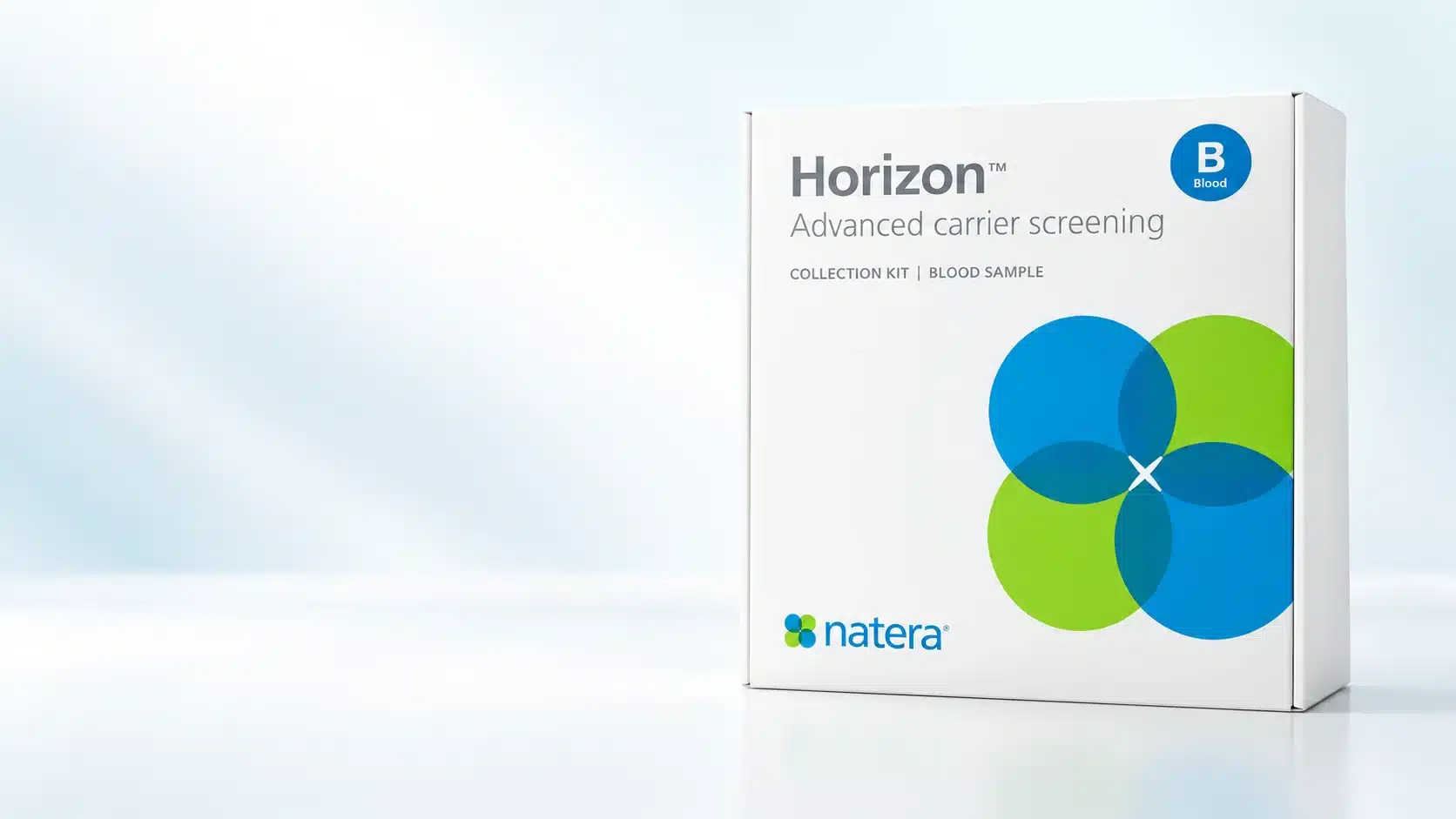
Horizon Genetic Carrier
Screening in Miami
One blood or saliva sample tells you whether you carry a gene variant for an inherited condition you could pass to a child. A calm, proactive step for couples planning a pregnancy or already expecting.
Screens 200+ inherited conditions. Results in 2 to 3 weeks. Reviewed with a board-certified physician.
 Joint Commission Accredited
The only one in Florida
What is Horizon carrier screening?
Horizon is a physician-ordered carrier screening panel from Natera that analyzes a single sample for more than 200 inherited recessive conditions. It is the standard of care for preconception and early-pregnancy planning under ACOG and ACMG guidance.
A carrier is a healthy person who quietly carries one copy of a gene variant for a recessive condition. Carriers almost never have symptoms, and most have no family history, which is why a sample is the only way to know. The result matters reproductively only when both partners carry a variant in the same gene. When that happens, each pregnancy has a 25 percent chance of being affected.
What is the Horizon test in pregnancy?
The Horizon test in pregnancy is a physician-ordered carrier screening panel that uses one blood or saliva sample to show whether you carry a gene variant for any of more than 200 inherited recessive conditions. It examines the parents’ genes. Prenatal diagnostic tests look at the fetus directly, and both ACOG and ACMG recommend offering it to anyone planning a pregnancy or already in early pregnancy. Results take two to three weeks.
Screening identifies whether you, and ideally your reproductive partner, carry a variant for the same condition before a child is conceived. Roughly four in five healthy adults are silent carriers of at least one recessive condition, so a positive result is common and, on its own, is usually reassuring. It simply gives you and your physician the information to plan ahead. For most couples, screening confirms that there is no shared risk.
Why it matters for couples
Older minimum panels checked only three conditions. Horizon screens for more than 200 (up to 274 on the full pan-ethnic panel), so it identifies carriers for many disorders that older testing would miss until an affected child was born. Both the American College of Obstetricians and Gynecologists (ACOG) and the American College of Medical Genetics (ACMG) recommend that expanded carrier screening be offered to all patients planning a pregnancy or in early pregnancy, regardless of ancestry or family history.
One family’s story
Lola’s parents had no carrier screening before she was born with spinal muscular atrophy. Natera’s three-minute video tells their story.
Video by Natera, the laboratory that performs the Horizon test.
The conditions a single panel can find
Horizon screens for over 200 inherited recessive and X-linked conditions, covering the disorders universally recommended by ACOG and ACMG plus expanded categories once limited to specific ancestries.
Cystic Fibrosis
One of the most common autosomal recessive disorders, with a carrier rate near 1 in 25 in people of Northern European descent.
Spinal Muscular Atrophy
The leading genetic cause of infant mortality. Carrier screening is recommended for everyone planning a pregnancy, regardless of ancestry.
Fragile X Syndrome
The most common inherited cause of intellectual disability. It is X-linked, so only the maternal partner is screened.
Tay-Sachs & Canavan
Severe neurodegenerative disorders of infancy, with elevated carrier frequency in Ashkenazi Jewish, French Canadian, and Cajun populations.
Sickle Cell & Thalassemias
Elevated carrier frequency in people of African, Mediterranean, and Southeast Asian ancestry. Sickle cell is the most common single-gene disorder in the United States.
Duchenne Muscular Dystrophy
A severe X-linked condition. Identifying carrier status informs reproductive planning for the maternal partner.
Plus lysosomal storage disorders (Gaucher, Niemann-Pick, Mucolipidosis IV) and metabolic conditions such as phenylketonuria, among more than 200 in total. Your physician selects the panel size that fits your ancestry, family history, and reproductive plans.
The panel, in plain terms
Horizon is the carrier screening panel from Natera, a genetics laboratory that processes more than two million reproductive-health tests a year. The figures below come from Natera’s published clinical documentation.
Every Horizon order also includes complimentary access to the laboratory’s board-certified genetic counselors for pre-test and post-test consultation, in addition to your physician review at TrufaMED.
Every step is physician-led
Physician consult
We review your reproductive plans, ancestry, family history, and (if applicable) pregnancy timing. Both partners are encouraged to consult together when feasible.
Sample collection
A single blood draw at our Surfside clinic, or a needle-free saliva kit, performed by a licensed provider. Your sample ships to the Natera lab the same day.
Lab analysis
Next-generation sequencing analyzes 200+ genes over two to three weeks. The report indicates your carrier status for each condition tested.
Results & partner testing
If you are identified as a carrier, we test your partner for the same conditions right away to clarify pregnancy risk, then walk through every reproductive option with you.
A 25 percent chance, and a real plan
When both partners carry a variant in the same recessive gene, each pregnancy carries a 25 percent risk. That number is real, and so are the options. Our physicians refer to maternal-fetal medicine and reproductive endocrinology specialists when warranted.
Each pregnancy is an independent draw. The odds do not change after an affected or unaffected child.
Preconception path
Screening before pregnancy opens the widest set of choices: IVF with preimplantation testing of embryos before transfer, donor eggs or sperm, adoption, or proceeding naturally with prenatal diagnosis.
Prenatal path
If you screen during pregnancy, diagnostic options include chorionic villus sampling at 10 to 13 weeks or amniocentesis at 15 to 20 weeks to test the fetus directly.
Informed preparation
Many couples choose to continue the pregnancy with full knowledge, arranging delivery at a tertiary center, lining up specialists, and preparing their home for an affected child’s needs.
Cascade testing
Siblings of a carrier have a 50 percent chance of also being carriers. A positive result is genetic information your whole family can act on.
Who should consider carrier screening
Screening is recommended across these groups. If more than one applies to you, the case for testing is stronger.
Planning a pregnancy
Ideally completed before conception so reproductive decisions can be made with complete information in hand.
Currently pregnant
Recommended in the first trimester if not done already. Results inform the diagnostic options available to you.
Egg or sperm donors
Carrier screening is standard practice for donors and is typically required by fertility clinics.
Partner of a known carrier
If your reproductive partner has tested positive, your screening clarifies the actual risk to a pregnancy.
Ashkenazi, Mediterranean, or African ancestry
Elevated carrier frequency for conditions such as Tay-Sachs, beta-thalassemia, and sickle cell. Horizon is pan-ethnic, so it serves every ancestry.
A family history of genetic disease
A personal or family history of any inherited condition strengthens the case for screening before conceiving.
Carrier screening, interpreted by physicians
A genetic result is only as useful as the conversation around it. At TrufaMED, every order, interpretation, and follow-up is handled by a board-certified physician.
Physician-ordered, not direct-to-consumer
Carrier results have to be read in clinical context. We do that with you, in person or by telehealth, so you understand exactly what your result means for a pregnancy.
Both partners tested when possible
A single-partner result is only half the picture. We coordinate partner testing efficiently so you get a complete, actionable risk number.
A Joint Commission-accredited facility
The same accreditation hospitals carry, held by only eight urgent care centers in the country. Our quality and patient-safety standards are independently audited.
Coordinated specialist referral
When both partners carry the same condition, we coordinate referral to maternal-fetal medicine to discuss prenatal diagnosis and next steps.
Insurance navigation
Carrier screening is often covered during preconception and pregnancy. We verify your benefits before any sample is collected.
IVF and embryo-testing coordination
If both partners carry the same condition and you are pursuing IVF, we coordinate with your fertility clinic on the preimplantation testing workflow.
What it costs and what is included
Using insurance: $205 visit. Natera bills the Horizon test to your insurance plan. Most major plans cover carrier screening ordered preconception or during pregnancy. Our team verifies your benefits before any sample is collected. Verification and prior authorization do not guarantee coverage. After the claim is processed, you may owe Natera a deductible or coinsurance. Your TrufaMED Genetic Screening Visit is $205, self-pay, and never billed to insurance. It covers your physician consult, in-clinic sample collection, and the results review.
Self-pay: $450 all-in. Self-pay is $450 for the Horizon test, your physician consult, sample collection, and the results review. If your plan does not cover the test, this is the lower-cost path. Without coverage, Natera bills you its own cash price for the test, and the $205 visit is added to that. We confirm your expected total before any sample is collected. Call (305) 537-6396 with any question before you book.
What is included. Both options include the physician consult, sample collection, results review, and partner-testing coordination if carrier status is identified. The $450 option also includes Natera’s lab analysis. See related screening on our preventive care, Galleri multi-cancer detection, and Empower hereditary cancer screening pages, or browse all testing services.
Every result reviewed by a board-certified MD
Carrier screening is ordered, interpreted, and followed up by physicians, with results discussed in plain language and a clear plan for what comes next.
Dr. Gedalia is a board-certified general surgeon and the Chief Medical Officer of TrufaMED. He oversees clinical protocols including genetic-risk interpretation and the integration of inherited risk into surveillance and reproductive-planning decisions for patients.
Dr. Naidoo is a board-certified emergency-medicine physician and TrufaMED’s Medical Director. He leads day-to-day physician operations and results-review visits, and coordinates downstream specialist referrals when screening identifies elevated risk requiring further workup.
This physician-first approach is why TrufaMED carries Joint Commission accreditation, a distinction held by only eight urgent care centers in the United States. It is the same standard applied to major hospitals.
Carrier screening, answered
What couples in Miami, Miami Beach, Bal Harbour, and Surfside ask before they screen.
Should we get carrier screening before or during pregnancy?
Ideally before. Preconception screening gives you the widest range of reproductive options if both partners are found to carry the same condition, including IVF with embryo testing, donor options, or prenatal diagnosis. If you are already pregnant, screening is best completed in the first trimester, and it is never too late to gain information that can guide delivery and newborn care.
Does insurance cover Horizon carrier screening?
Most major plans cover carrier screening ordered preconception or during pregnancy. Natera bills the test to your plan after our team verifies your benefits. Verification and prior authorization do not guarantee coverage. With insurance, you pay TrufaMED $205 for the Genetic Screening Visit, which we never bill to insurance. If your plan does not cover the test, the $450 all-in self-pay option is the lower-cost path. We confirm your expected total before any sample is collected.
What happens if both partners carry the same condition?
If both reproductive partners carry a pathogenic variant in the same recessive gene, each pregnancy has a 25 percent chance of producing an affected child. Options include IVF with preimplantation testing of embryos before transfer, donor eggs or sperm, prenatal diagnosis through CVS or amniocentesis, or natural conception with informed preparation. Our physicians walk you through every path and refer to maternal-fetal medicine when warranted.
How is this different from a basic three-gene panel?
Older minimum panels test only cystic fibrosis, spinal muscular atrophy, and hemoglobin disorders. Horizon screens for more than 200 conditions (up to 274 on the full panel), identifying carriers for many recessive disorders that would otherwise go unrecognized until an affected child is born.
Is the test a blood draw or saliva?
Either. The Horizon panel can be run from a standard venous blood draw at our Surfside clinic or from a needle-free saliva kit, and both sample types are equally accurate. Your physician will recommend the option that fits your visit and timeline.
Does my ancestry change which panel I should get?
Current guidance favors a pan-ethnic expanded panel for everyone, regardless of ancestry, because a partner’s ancestry may differ and self-reported ancestry can be incomplete. Horizon is pan-ethnic by design, so the panel does not rely on you knowing your full genetic background.
What if my partner cannot come in?
Sequential testing is acceptable. We can screen the first partner, then test the second partner only for any condition where the first was identified as a carrier. For a partner outside South Florida, this can also be arranged by mail-in collection so both results still inform your pregnancy risk.
How is my genetic data protected?
The laboratory is HIPAA-compliant and does not share identifiable data with third parties without your consent. Federal law (the Genetic Information Nondiscrimination Act, GINA) prevents health insurance and employment discrimination based on genetic information. GINA does not extend to life, disability, or long-term care insurance, and we discuss that with you before testing.
Will carrier status affect my own health?
For autosomal recessive conditions, being a carrier almost never affects your personal health; it matters for reproductive planning. For a few X-linked conditions, such as a Fragile X premutation or Duchenne carrier status, there can be personal health implications, which your physician reviews with you when relevant.
What patients say
Best clinic ever
Excellent. Attentive clean
The staff is very nice and courteous
Very nice receptionist
Best place I’ve been to by far great service
The staff are amazing, from front desk, registration, nurse , the Dr. A mean the facility very clean, conftuble, I'll give them 150% plus on everything and all. Thank you so very much
Care grounded in recognized authorities
Horizon is a physician-ordered genetic carrier screen, interpreted in line with national medical-genetics guidelines, in a Joint Commission accredited setting. These independent sources are offered for further reading.
Find the right care
Find us in Surfside
Hours
Monday–Friday 9 AM – 9 PM
Saturday 11 AM – 11 PM
Sunday 12 PM – 8 PM
Open seven days a week for consults and sample collection.
Contact
Phone (305) 537-6396
WhatsApp +1 (305) 842-9801
Email [email protected]
For a life-threatening emergency, call 911. TrufaMED treats non-life-threatening conditions.
Know before you grow your family
One sample, a clear answer, and a physician who walks you through what it means. Carrier screening is a calm, proactive step toward the family you are planning.
Notes from your physicians, every other week.
Seasonal health for South Florida, what we are seeing at the clinic, and the occasional thing worth knowing. No spam, and you can leave anytime.
TrufaMED, in your pocket.
Book urgent care, IV therapy, HBOT and telehealth, track your wellness, and reach your care team, all from the app.