
Services
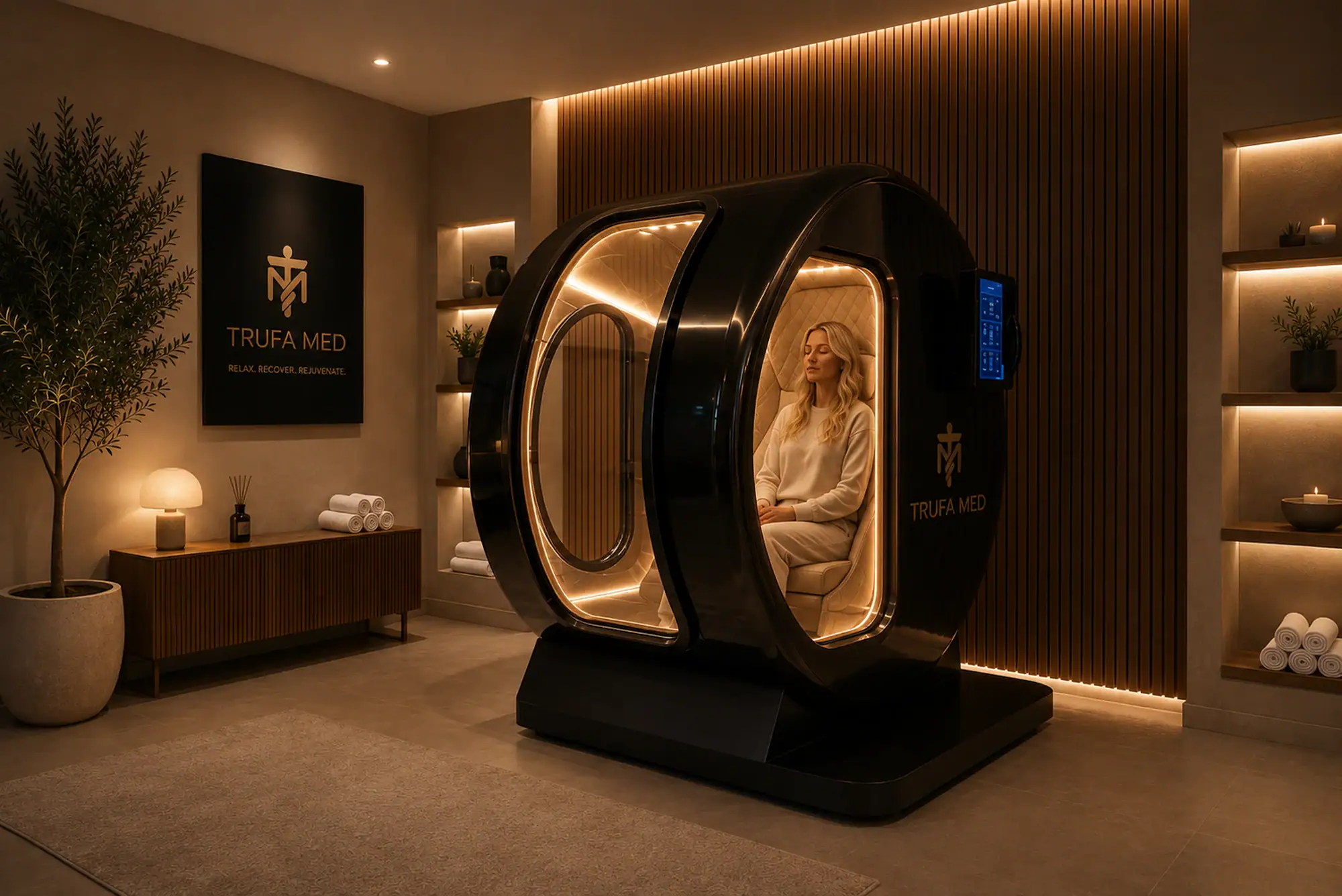
HBOT Benefits,
Explained
What hyperbaric oxygen therapy actually does, the evidence behind it, and who it helps. A clear, physician-led guide to pressurized 100% oxygen, written by the team that delivers it.
A physical exam with an on-site chest X-ray is required before your first session. Every session is physician supervised.
 Joint Commission Accredited
The only one in Florida
What does hyperbaric oxygen therapy do?
Hyperbaric oxygen therapy, or HBOT, places you inside a pressurized chamber where you breathe 100% pure oxygen at 2.0 to 2.4 atmospheres. That elevated pressure dissolves far more oxygen into your blood plasma, bypassing red blood cells entirely, and floods oxygen-starved tissue at the cellular level. The result is accelerated healing, reduced inflammation, stem-cell mobilization, and measurable improvement in conditions ranging from diabetic foot wounds to post-concussion recovery.
At normal pressure, oxygen travels almost entirely bound to hemoglobin. Under hyperbaric conditions, basic gas laws combine to dissolve free oxygen directly into plasma, lymph, and the fluid around the brain and spine, reaching tissue that compromised circulation cannot serve. At TrufaMED in Surfside, HBOT is delivered in a clinical-grade chamber and supervised by a physician, in the same Joint Commission-accredited facility that houses our on-site digital X-ray, labs, and IV therapy.
How HBOT works at the cellular level
HBOT does not treat disease directly. It restores the biological environment that lets the body heal itself. Six mechanisms drive the results, each backed by published research.
More oxygen to starved tissue
At 2.4 ATA, plasma oxygen rises roughly twentyfold, from about 0.3 to 6.0 mL per deciliter. That restores enough tissue oxygen to sustain cellular metabolism even where red blood cells cannot reach, such as a swollen wound or a fibrotic, post-radiation zone.
Stem-cell mobilization
A landmark study in a peer-reviewed cardiovascular physiology journal (Thom et al., 2006) found that a 20-session HBOT course mobilized up to an eightfold increase in circulating stem cells from the bone marrow. These progenitor cells migrate to injury sites and begin repair.
New blood vessels
Repeated HBOT cycles strongly upregulate vascular endothelial growth factor, driving measurable growth of new capillary networks in tissue that was previously short on blood flow. This angiogenesis is a key driver of both wound closure and post-surgical recovery.
Collagen and tissue repair
Oxygen is a required cofactor in the biochemistry that assembles stable collagen, the scaffold of healthy tissue. Higher oxygen availability accelerates the body’s natural repair machinery after surgery, injury, or hard training.
Less inflammation
Hyperbaric oxygen quiets the inflammatory cascade that drives swelling, bruising, and chronic pain, which is why it pairs so well with surgical recovery and injury rehabilitation.
Antimicrobial support
High tissue oxygen levels enhance the ability of white blood cells to fight infection and improve the effect of some antibiotics, part of why HBOT is established for stubborn bone and soft-tissue infections.
Where HBOT is proven to help
These are the established, peer-reviewed reasons patients pursue HBOT. Each has a dedicated page with the protocol and what to expect.
Wound healing
For diabetic foot ulcers and chronic non-healing wounds, added oxygen reaches tissue that limited blood flow has left behind, and the new vessels HBOT builds carry healing forward after treatment ends. This is one of the longest-established HBOT indications.
Wound healing carePost-surgical recovery
A common protocol builds oxygen reserves before a procedure, then supports tissue repair afterward, which can reduce swelling and bruising. Patients recovering from cosmetic, orthopedic, and reconstructive surgery use it most.
Post-surgery recoveryConcussion and brain injury
Greater oxygen perfusion supports the brain’s neuroprotective pathways, which is why HBOT is studied for concussion, traumatic brain injury, and cognitive recovery under physician guidance.
Concussion and TBI careReduced inflammation
By calming the inflammatory response, HBOT can ease the swelling and pain that follow surgery, injury, or intense training, often paired with a structured recovery plan.
Recovery add-onsAthletic recovery
Competitive and amateur athletes use HBOT for faster tissue repair and less inflammation between hard sessions, often as part of a broader performance plan.
Performance medicineEstablished medical indications
Beyond recovery, HBOT is FDA and society approved for carbon monoxide poisoning, decompression sickness, gas gangrene, crush injuries, radiation injury, refractory osteomyelitis, and compromised skin grafts and flaps.
All HBOT servicesWhat a session actually feels like
Most patients describe HBOT as deeply relaxing. The visit runs in this order, starting with the exam that clears you for therapy.
Exam and clearance
Your first visit includes a physical exam and an on-site chest X-ray. Your physician reviews your history and confirms HBOT is safe and appropriate before any session begins.
Settle into the chamber
You change into clean cotton clothing and leave electronics and jewelry outside. You lie comfortably in the clinical-grade chamber, free to rest, read, or watch a device.
Pressure and pure oxygen
Pressurization takes about 10 to 15 minutes. You may feel a mild ear fullness that clears like it does on a plane while you breathe 100% pure oxygen at 1.6 ATA.
Recover and repeat
A session runs 60 to 90 minutes, with a gradual return to normal pressure. Most patients feel relaxed afterward and energized the next day, then return per their protocol.
What HBOT can and cannot claim
The HBOT landscape includes providers who overclaim. We do not. Some uses are established, others are still under study, and we tell you which is which.
Established and proven
- Diabetic and chronic non-healing wounds
- Delayed radiation injury and tissue repair
- Carbon monoxide poisoning and decompression sickness
- Refractory bone and soft-tissue infections
- Compromised skin grafts and flaps, thermal burns
Promising, still under study
- Long COVID and post-viral recovery
- Concussion and cognitive recovery
- Athletic and post-surgical recovery as wellness use
- Skin rejuvenation and healthy aging
- We share current trial data, not marketing claims
For wellness and recovery use, HBOT follows an evidence-informed protocol. It does not treat a specific approved condition. Your physician explains where the evidence stands for your goal.
When HBOT may need to wait
A few conditions can rule out therapy or require treatment first. This is exactly why the required exam and on-site chest X-ray come before your first session.
An untreated collapsed lung, an active upper-respiratory or sinus infection, severe claustrophobia, certain medications, and certain implanted devices may prevent or delay therapy until they are reviewed. Pregnant patients are not candidates for wellness HBOT. Your physician examines you, reviews your history and medication list, and gives you a clear, honest answer before any session begins. That medical clearance is built into your first visit, and it is what makes TrufaMED HBOT a clinical treatment.
Simple, all-inclusive HBOT pricing
Transparent rates with no hidden fees. Your first visit covers the medical clearance you need before therapy, and the package is built for a full physician-set protocol. Some indications may be covered by insurance when medically necessary.
The required intake before any HBOT protocol. Your physician confirms HBOT is right for you, then you begin the same day.
Book first sessionThe Wellness Package for patients on a recovery or performance protocol, designed around the session counts our physicians recommend.
Reserve the packageFor patients returning for additional sessions outside a package, or for maintenance once a protocol is complete.
Book a follow-upConcierge members receive member pricing on HBOT. See our concierge memberships, the full HBOT service page, or our insurance page.
Board-certified physicians supervise every protocol
Your HBOT is directed by Dr. Uri Gedalia, Chief Medical Officer, and Dr. Shane D. Naidoo, Medical Director, whose combined experience spans general surgery, emergency medicine, trauma, and wound care.
Dr. Gedalia earned his medical degree from Louisiana State University and completed his surgical residency at St. Vincent’s Hospital in New York. He serves as Regional Chief Medical Officer for a surgical and wound-care program, experience that shapes how TrufaMED designs HBOT protocols for surgical and wound recovery.
Dr. Naidoo brings extensive adult and pediatric emergency, trauma, and critical-care experience from high-volume emergency departments across the East Coast. His training means HBOT patients are screened and supervised by a physician who has handled the most acute clinical situations.
This physician-first standard is why TrufaMED carries Joint Commission accreditation, held by only eight urgent care centers in the United States. It is the same standard applied to major hospitals, and it governs every HBOT session.
HBOT benefits, your questions answered
The questions patients across Miami, Miami Beach, Bal Harbour, and Surfside ask before their first session.
What does an HBOT session feel like?
Most patients find it deeply relaxing. The session opens with a pressurization phase of roughly 10 to 15 minutes, during which you may notice a fullness in your ears, the same equalization you feel on an airplane descent, relieved by swallowing or yawning. Once at pressure the chamber is quiet and comfortable, and most patients read, watch a device, or rest. Depressurization is gradual. Many patients feel relaxed afterward and energized the following day.
How many HBOT sessions will I need?
It depends entirely on the clinical indication. Established wound-healing and radiation-injury protocols typically run 20 to 40 sessions, often daily on weekdays. Post-surgical recovery protocols may range from 5 to 15 sessions depending on the procedure. Wellness protocols are individualized, and some patients begin with a 10-session introductory course and reassess. Our physicians set realistic expectations during your consultation, with no pressure to commit before you understand the plan.
Are there side effects from HBOT?
HBOT has a strong safety profile under proper supervision. The most common effect is mild ear or sinus discomfort during pressurization, which resolves with an equalization technique. Oxygen toxicity is exceedingly rare at the therapeutic pressures used in clinical HBOT (2.0 to 2.4 ATA) for standard session lengths. Mild, temporary nearsightedness can develop during intensive multi-week protocols and resolves after treatment ends. Serious events are rare when patients are properly screened and monitored by a physician-led team.
I get claustrophobic. Can I still do HBOT?
Many patients with mild to moderate claustrophobia complete HBOT successfully. We offer a brief orientation at reduced pressure before you commit to a full session. The chamber has an intercom and an observation window, you can speak with the attending nurse at all times, and you can exit at any point. Patients with severe claustrophobia who cannot tolerate the enclosed space, even with these measures, may not be appropriate candidates, and we will tell you that honestly during consultation.
Can I bring my phone into the chamber?
No. A clinical-grade 100% oxygen chamber does not permit personal electronics inside the pressure vessel, because fire-safety regulations govern a pure-oxygen environment. We provide a tablet or reading material instead. Some facilities use enriched-air chambers with different policies, but at TrufaMED your phone and other electronics stay outside the chamber for your safety.
How long do the benefits of HBOT last?
For wound-healing indications, the new blood vessels and tissue repair that HBOT initiates are a lasting structural change: the vessels that form during treatment persist. For wellness and performance use, the duration is individual. Cognitive improvements documented in research trials have shown persistence at one-month follow-up, and stem-cell mobilization is measurable for weeks after a 20-session course. Many wellness patients choose periodic maintenance courses of 5 to 10 sessions seasonally.
What conditions is HBOT proven to treat?
The Undersea and Hyperbaric Medical Society and the FDA recognize HBOT for a defined set of approved indications, including carbon monoxide poisoning, decompression sickness, gas gangrene, crush injuries, diabetic lower-extremity wounds, refractory osteomyelitis, delayed radiation injury, compromised skin grafts and flaps, necrotizing soft-tissue infections, and thermal burns. These are evidence-based, peer-reviewed indications with established clinical protocols, distinct from the emerging wellness and performance uses still under study.
Is wellness HBOT the same as clinical HBOT?
At TrufaMED today, sessions run at 1.6 ATA in a physician-supervised soft-shell chamber on 100% medical oxygen; a hard-shell chamber reaching 3.0 ATA arrives in late August 2026. What differs is the indication. Wellness sessions follow an evidence-informed protocol to support recovery and performance. They do not treat a specific approved condition. Be cautious of unsupervised facilities offering sessions in air-pressurized chambers with no physician present, which deliver far less dissolved oxygen than physician-supervised HBOT on 100% oxygen.
How do I prepare for my first HBOT session?
Arrive in clean, natural-fiber clothing, since cotton is ideal and synthetic fabrics and wool are not permitted inside a 100% oxygen environment. Do not apply perfume, cologne, or petroleum-based products beforehand. Eat a light meal, because neither a full nor an empty stomach is ideal during pressurization. If you have a cold, sinus congestion, or an active ear infection, contact us first and we will defer the session to avoid barotrauma. Bring a list of your current medications and supplements to your consultation.
Can HBOT be combined with IV therapy?
Yes. Many patients pair HBOT with in-clinic IV therapy for a single recovery or wellness visit. IV nutrient delivery supports the cellular environment in which HBOT works, and the combination may support antioxidant capacity, mitochondrial function, and a calmer inflammatory response. Our physicians discuss combination protocols individually. You can explore IV therapy at TrufaMED to plan a combined visit.
What patients say
Best clinic ever
Excellent. Attentive clean
The staff is very nice and courteous
Very nice receptionist
Best place I’ve been to by far great service
The staff are amazing, from front desk, registration, nurse , the Dr. A mean the facility very clean, conftuble, I'll give them 150% plus on everything and all. Thank you so very much
Care grounded in recognized authorities
TrufaMED is a Joint Commission accredited clinic, and our hyperbaric protocols reference peer-reviewed evidence and federal guidance. These independent sources are offered for further reading.
Keep exploring
Find us in Surfside
Hours
Monday–Friday 9 AM – 9 PM
Saturday 11 AM – 11 PM
Sunday 12 PM – 8 PM
HBOT sessions are by appointment. Same-day booking is often available.
Contact
Phone (305) 537-6396
WhatsApp +1 (305) 842-9801
Email [email protected]
For a life-threatening emergency, call 911. TrufaMED treats non-life-threatening conditions.
See if HBOT is right for you
Start with a physician exam that confirms HBOT fits your goal, then begin clinical-grade hyperbaric oxygen, supervised at an accredited facility.
Notes from your physicians, every other week.
Seasonal health for South Florida, what we are seeing at the clinic, and the occasional thing worth knowing. No spam, and you can leave anytime.
TrufaMED, in your pocket.
Book urgent care, IV therapy, HBOT and telehealth, track your wellness, and reach your care team, all from the app.