
Services
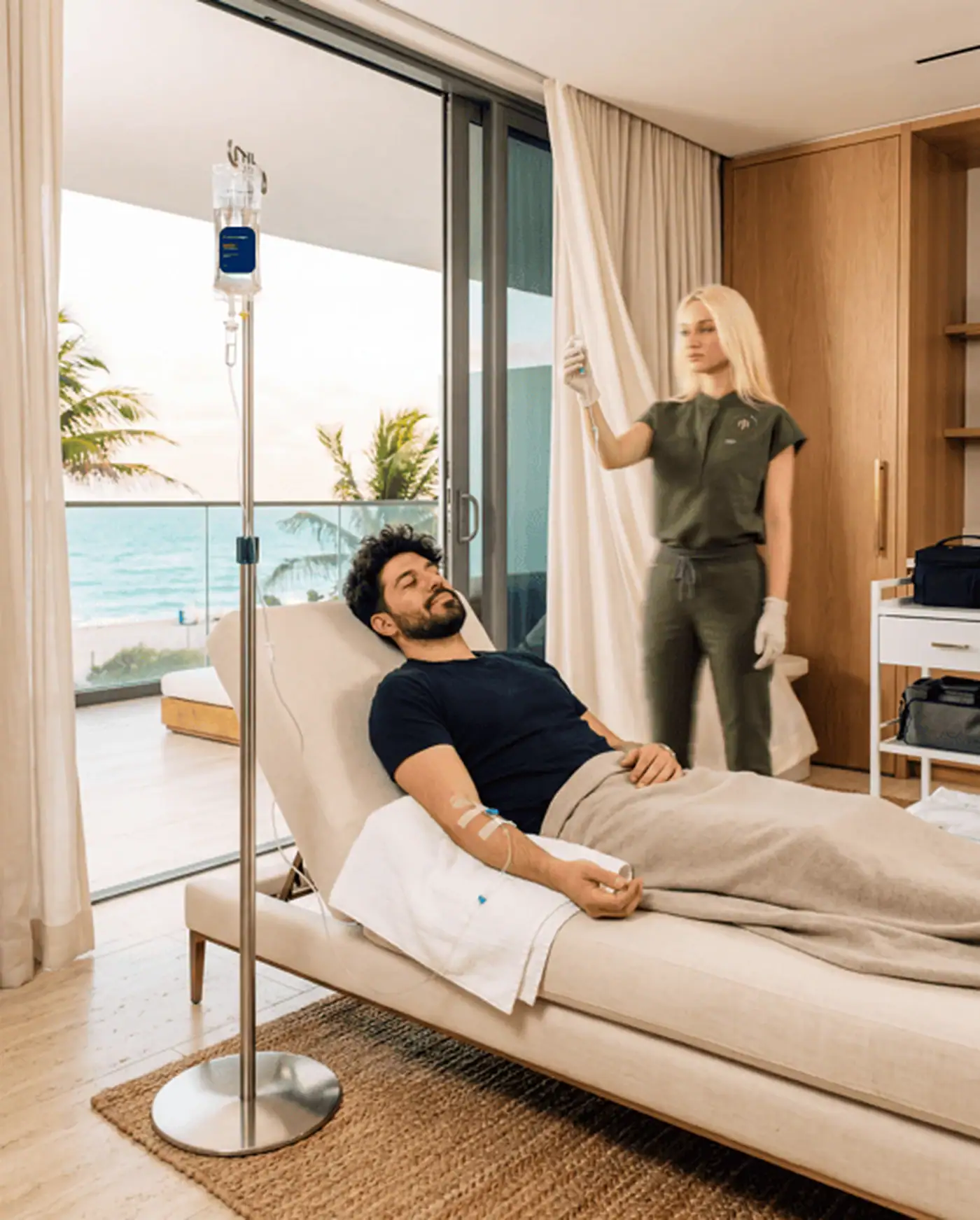
IV Hydration,
Explained
A plain guide to how IV fluids work, what is actually in the bag, who genuinely benefits, and when fluids are medically indicated. Reviewed by our medical director.
Educational guide. Every infusion is physician-ordered after a clinical assessment.
 Joint Commission Accredited
The only one in Florida
What is IV hydration?
IV hydration is the direct delivery of sterile fluid (normal saline, Lactated Ringer’s, or a dextrose solution) into the bloodstream through a small intravenous catheter. Unlike drinking water, IV fluids bypass the gut entirely and reach 100% bioavailability within minutes, which is why they are the standard of care for moderate-to-severe dehydration, heat illness, vomiting, and acute illness with poor oral intake.
At TrufaMED in Surfside, every IV hydration session is physician-ordered and runs in a Joint Commission-accredited, CLIA-certified clinical setting, beginning with a brief assessment. This page explains the science plainly so you can recognize when fluids are genuinely needed and have an informed conversation with your physician. For the full drip menu and pricing, see IV therapy in Miami.
Why the IV bypasses your gut
A nurse or physician places a small catheter, usually in the forearm, and a bag of fluid runs in over 30 to 60 minutes. The reason it works faster than drinking comes down to where the fluid goes and how much of it your body can actually use.
The gut is the bottleneck
When you drink, absorption depends on intestinal transit and an intact mucosal lining. With vomiting, diarrhea, or severe dehydration, that absorption is slow and unreliable. An IV skips it: the fluid enters circulation immediately, plasma volume expands, and blood pressure stabilizes within about 20 minutes.
100% bioavailability
Bioavailability is the fraction of what you take in that reaches the bloodstream in active form. Oral fluids and supplements land around 10 to 50% depending on the compound and your gut. Intravenous delivery is 100% by definition: no first-pass metabolism, no absorption variability, no delay.
Physician-ordered, not self-serve
A provider reviews your complaint, vital signs, and hydration status before choosing the fluid, volume, and rate. This is the difference between a clinical setting and a wellness lounge: the same standard of care as a hospital, without the long emergency-room wait.
Oral rehydration vs IV fluids, honestly
IV is not always the answer. For mild dehydration with a working gut, drinking is the right first move. Here is how the two routes compare across what matters, so you can tell when oral has stopped being enough.
| Factor | Direct to veinIV fluids | Through the gutOral / sports drink |
|---|---|---|
| Absorption | 100% | 10 to 50% |
| Time to effect | 15 to 30 minutes | 60 to 180 minutes |
| Needs a working gut | No, bypasses it | Yes |
| Works while vomiting | Yes | No |
| Best for | Moderate to severe dehydration | Mild dehydration, prevention |
| Physician oversight | Required at TrufaMED | None needed |
When oral rehydration is the right call
Mild dehydration, under about 3% of body water lost, usually responds to oral rehydration if you can keep fluids down, your urine is pale yellow, you have no dizziness on standing, your resting heart rate is under 100, and there is no confusion. If oral fluids do not improve symptoms within 2 to 3 hours, come in for a clinical evaluation.
The three standard IV fluids
Every IV hydration drip starts with one of three FDA-approved crystalloid solutions. The choice depends on your presentation, electrolyte status, and underlying condition, and the physician selects the base at the time of assessment.
Normal saline (0.9% NaCl)
An isotonic fluid that matches the osmolarity of plasma, so it does not shift water across cell membranes. That makes it the safest universal choice for rapid volume expansion, and the first-line fluid for low blood volume, hemorrhage, and sepsis in hospital emergency departments. Most add-on vitamins and medications are mixed into a saline bag.
Lactated Ringer’s
A balanced crystalloid that resembles plasma more closely than saline, adding potassium, calcium, and lactate, a bicarbonate precursor the liver converts for mild buffering against acidosis. For significant dehydration from vomiting, diarrhea, heat exhaustion, or gastroenteritis, it replaces the fuller spectrum of lost electrolytes. Our Rehydrate+ drip uses an LR base with B-complex.
D5W (5% dextrose)
Carries 50 grams of glucose per liter. Once the glucose is metabolized, what remains is free water that spreads across body compartments, so it is not a volume expander the way saline or LR is. Its uses are specific: correcting low blood sugar, diluting many IV medications, and minimal caloric support. It is not used for routine rehydration.
When IV hydration is medically indicated
IV hydration is not a luxury; it is a necessary intervention in specific situations. The presentations below reliably mean that oral rehydration has failed or will fail, and intravenous fluids are the appropriate standard of care.
Stomach flu, vomiting, diarrhea
Gastroenteritis and food poisoning drain fluid and electrolytes fast. When you cannot keep fluids down, IV hydration with an anti-nausea medication restores volume and breaks the vomiting cycle, usually within 30 to 60 minutes.
Heat exhaustion
South Florida heat creates real risk during outdoor events and exercise. Heat exhaustion with normal mentation is appropriate for urgent care IV management with isotonic fluids. Heat stroke, with core temperature above 104, is a 911 emergency.
Post-exercise dehydration
Athletes can lose 2 to 3 liters per hour in extreme heat. Past roughly 5% of body weight, or with confusion or vomiting, IV fluids are appropriate, typically one liter of saline or LR, sometimes with magnesium and B-vitamins.
Hangover recovery
Alcohol suppresses antidiuretic hormone and drives a 1 to 2 liter fluid deficit, plus electrolyte loss. Our Hangover Recovery IV pairs one liter of saline with anti-nausea medication, B-vitamins, and liver support.
Acute illness, poor intake
High fever, flu, or a severe sore throat often makes swallowing painful and suppresses appetite. IV hydration replaces volume and carries fever and anti-nausea medications at immediate bioavailability. Our urgent care team can evaluate and treat in one visit.
Medication-related fluid loss
Diuretics, GLP-1 medications such as semaglutide, and chemotherapy agents can cause meaningful fluid depletion. A physician assessment sets the right volume and electrolyte mix based on your medications and labs.
Call 911 instead of coming in if you have
Confusion or altered consciousness, inability to stand, a systolic blood pressure below 90, a core temperature above 104, signs of shock such as cold clammy skin and a rapid weak pulse, or any loss of consciousness. These need an emergency department.
Signs you may need IV fluids
Mild dehydration can be handled at home. The following point to moderate-to-severe dehydration that warrants a clinical evaluation and, often, IV fluid therapy.
Dark or amber urine
Urine should be pale yellow. Dark, tea-colored urine is one of the earliest reliable signs that the kidneys are conserving water and your fluid deficit is significant.
Dizziness on standing
Feeling lightheaded or unsteady when you stand reflects too little plasma volume to hold blood pressure against gravity. That orthostatic change usually means the deficit is large enough to consider IV therapy.
Rapid heart rate
The heart speeds up to compensate for low blood volume. A resting rate above 100 in the setting of vomiting, diarrhea, or heat exposure is a dependable sign of clinically significant dehydration.
Confusion or brain fog
The brain is sensitive to fluid shifts. A 2 to 3% body-water deficit measurably slows reaction time and short-term memory. New confusion after illness or heat exposure warrants prompt evaluation.
Dry mouth and skin
Dry or sticky oral tissue is a reliable exam finding, and reduced skin turgor (slow return after a pinch) points to extracellular fluid depletion.
Persistent headache
Dehydration dilates cerebral vessels and causes pain. A headache that will not clear with oral fluids and rest, especially with vomiting or illness, often resolves quickly once fluids are replaced.
Who should walk in now
If you have two or more of these signs, or you have been unable to keep fluids down for more than four hours, walk in to TrufaMED at 9445 Harding Ave, Surfside. We are open 7 days a week, no appointment required, and our clinical team will assess you right away.
TrufaMED hydration drips and pricing
Four physician-designed hydration protocols, each built on a validated fluid base with optional electrolyte and vitamin additions. Prices are in-clinic rates at our Surfside clinic; mobile delivery across South Florida adds $50 to each.
Rehydrate
$200The foundational protocol. One liter of isotonic saline restores plasma volume, corrects mild-to-moderate sodium and chloride loss, and improves blood pressure and perfusion. Ideal for straightforward dehydration from heat, illness, or low intake.
Rehydrate+
$225A step up from basic saline. Lactated Ringer’s replaces the fuller spectrum of electrolytes lost through vomiting, diarrhea, and sweat, and the B-complex supports cellular energy, which is valuable after prolonged illness.
Myers’ Cocktail
$280The original physician-formulated IV, developed by John Myers, MD, in the 1970s. Beyond one liter of saline, it delivers magnesium, calcium, B-vitamins, and high-dose vitamin C for hydration plus comprehensive micronutrient repletion.
Hangover Recovery
$285One liter of saline with anti-nausea medication, B-complex, magnesium, and glutathione, an antioxidant that supports the liver’s processing of alcohol byproducts. Most patients report relief within about 45 minutes.
Red light therapy is included free with every in-clinic IV session. A physician assessment is required before every infusion, and add-ons such as anti-nausea medication, a magnesium push, or additional vitamins may be recommended based on your presentation. Pricing confirmed April 2026. See the full IV menu or membership options.
Why the assessment before every infusion
IV hydration is safe for the vast majority of patients, but some conditions require a modified protocol or make a standard infusion inadvisable. The clinical assessment before every drip is a genuine safety measure.
Congestive heart failure
A rapid, wide-open infusion can push a weakened heart into pulmonary edema. Patients with heart failure can receive fluids, but with reduced rates, smaller volumes, and physician monitoring.
Severe kidney disease
Kidneys that cannot regulate fluid balance risk dangerous overload. Patients on dialysis or with a GFR below 30 need nephrology guidance before IV hydration outside a hospital.
Sodium disorders
Correcting severe high or low sodium too quickly can worsen the imbalance or cause osmotic demyelination. These need measured correction.
Fluid hypersensitivity
Rare but documented reactions to saline additives, preservatives, or IV-set components mean some patients need specialist management before any infusion.
Uncontrolled hypertension
Large-volume saline adds a meaningful sodium load. Patients with severe uncontrolled blood pressure should discuss fluid selection with the physician first.
The questions we ask first
History of heart or kidney disease, current diuretics or interacting medications, current blood pressure, how long symptoms have lasted, and how much you have managed to drink. Two minutes that protect you.
The difference between the same IV bag at a clinical facility and at a wellness spa is not the fluid. It is the physician assessment that determines whether that fluid is safe and appropriate for you specifically. For non-life-threatening needs; for a true emergency, call 911.
Ordered and reviewed by physicians
IV hydration at TrufaMED is physician-ordered, never handed to an unsupervised standing order. A board-certified physician leads every shift and approves the fluid, volume, and rate for each patient.
Dr. Naidoo directs clinical operations and reviewed this guide. His emergency-medicine background, managing dehydration, heat illness, and electrolyte emergencies at high-volume departments, shapes the protocols that govern every infusion.
Dr. Gedalia built TrufaMED around physician-led protocols and Joint Commission accreditation. He oversees the IV therapy program and the formulary, holding it to a standard usually reserved for hospital systems.
TrufaMED is Joint Commission accredited, a distinction held by only eight urgent care centers in the United States. It is the same standard applied to major hospitals, and it governs every IV session we run.
IV hydration, answered
Physician-reviewed answers to what patients across Miami Beach, Surfside, and Bal Harbour ask most about IV fluids.
What is IV hydration, and how does it differ from drinking water?
IV hydration delivers a sterile saline or balanced-electrolyte solution straight into a vein through a small catheter, bypassing the gut entirely. When you drink, absorption depends on intestinal transit and mucosal health, and it slows or stops when you are vomiting, have diarrhea, or are severely dehydrated. An IV reaches the bloodstream at 100% bioavailability within minutes. At TrufaMED every infusion is physician-ordered: a provider reviews your symptoms and vital signs, selects the fluid type and volume, and monitors your response.
What is the difference between normal saline, Lactated Ringer’s, and D5W?
Normal saline (0.9% sodium chloride) is an isotonic fluid with 154 mEq/L each of sodium and chloride. It is the universal default for rapid volume replacement and is safe for nearly all patients. Lactated Ringer’s adds potassium, calcium, and lactate (a buffer) to closely mirror plasma, which makes it the better choice after prolonged vomiting or diarrhea. D5W (5% dextrose in water) carries glucose and behaves as free water once that glucose is metabolized; it is used for low blood sugar and medication dilution, and it is not appropriate for routine volume replacement. Your physician selects the base from your clinical picture.
How long does an IV hydration session take?
A standard one-liter bag infuses over roughly 30 to 60 minutes. Counting check-in, the physician assessment, IV placement, infusion, and discharge, total clinic time is usually 45 to 75 minutes. A faster rate is possible for urgent dehydration but requires physician approval. Walk-in patients are assessed as soon as they arrive at our Surfside clinic.
Is IV hydration safe, and what are the risks?
Given by trained clinical staff under physician supervision, IV hydration is very safe. The documented risks are minor site reactions such as bruising or phlebitis in roughly 2 to 5% of patients, rare fluid overload in people with heart or kidney impairment when volumes are not adjusted, and very rarely air embolism, which standard line-priming prevents. At TrufaMED every line is placed using sterile technique under physician orders, vital signs are checked before and during the infusion, and contraindications are screened in the assessment we run before every drip.
When is IV hydration medically necessary instead of drinking fluids?
IV fluids become the appropriate standard of care when oral rehydration has failed or cannot work: severe dehydration from stomach flu, vomiting, or diarrhea; heat exhaustion; post-exercise dehydration past about 5% of body weight; and acute illness with poor oral intake. The reliable signal is that you cannot keep fluids down, or losses are outpacing what you can drink. Mild dehydration with an intact gut usually responds to oral rehydration first.
Who should not get routine IV hydration without specialist oversight?
Certain conditions call for a modified protocol or make a standard wide-open infusion inadvisable. Congestive heart failure raises the risk of fluid overload and pulmonary edema, so it needs reduced volumes and rates. End-stage kidney disease or a GFR below 30 needs nephrology guidance. Severe sodium disorders require measured correction. A documented hypersensitivity to IV fluid components also needs specialist management. This is exactly why we assess every patient before any infusion.
Does insurance cover IV hydration in Miami?
It depends on the clinical indication and your plan. When IV hydration is part of an urgent care visit for a documented condition such as dehydration from gastroenteritis, heat exhaustion, or acute illness, it is typically covered under most commercial plans we accept. Elective wellness drips without a clinical indication are generally not covered. TrufaMED accepts Aetna, Cigna, United Healthcare, Humana, Oscar Health, Medicare, and self-pay. Call (305) 537-6396 to verify coverage before your visit.
Which IV fluid is best for dehydration, saline or Lactated Ringer’s?
For simple dehydration from heat, low intake, or mild illness, normal saline is the appropriate first-line fluid, which is what our Rehydrate protocol ($200) delivers. For significant dehydration with large electrolyte losses, from prolonged vomiting, diarrhea, gastroenteritis, or food poisoning, Lactated Ringer’s is often preferred because it replaces a broader electrolyte profile. Our Rehydrate+ ($225) uses a Lactated Ringer’s base with B-complex. The physician makes this call from your presentation.
Can IV hydration help with a hangover?
Yes. Hangover is one of the most common reasons patients come in for fluids. Alcohol suppresses antidiuretic hormone and drives a fluid deficit of roughly 1 to 2 liters, alongside depletion of B-vitamins, magnesium, and antioxidants. Our Hangover Recovery IV ($285) delivers one liter of normal saline with anti-nausea medication, B-complex, magnesium, and glutathione to support the liver. Most patients report meaningful improvement within 30 to 45 minutes. Walk in or book same day.
Do I need a doctor’s order for IV hydration at TrufaMED?
Yes, and that is by design. Before any line is placed, a board-certified physician reviews your symptoms, current vital signs, and relevant history, then sets the fluid type, volume, and rate. This is a safety measure, not paperwork: it prevents fluid overload in patients with heart or kidney conditions, flags presentations that need more than standard hydration, and matches the electrolyte mix to your specific deficit. It is the line that separates a Joint Commission-accredited urgent care from a wellness IV lounge.
How much does IV hydration cost in Miami?
At our Surfside clinic, IV hydration starts at $200 for Rehydrate (one liter of normal saline). Rehydrate+ with Lactated Ringer’s and B-complex is $225, Myers’ Cocktail is $280, and Hangover Recovery is $285. Mobile delivery across South Florida adds $50 to each protocol. Most commercial insurance is accepted for clinically indicated IV therapy with an urgent care evaluation, and self-pay rates are confirmed in advance, so there are no surprise charges.
IV hydration near you
Our Surfside clinic serves in-clinic IV hydration across the Miami Beach barrier-island corridor. Mobile delivery extends across South Florida.
What patients say
Best clinic ever
Excellent. Attentive clean
The staff is very nice and courteous
Very nice receptionist
Best place I’ve been to by far great service
The staff are amazing, from front desk, registration, nurse , the Dr. A mean the facility very clean, conftuble, I'll give them 150% plus on everything and all. Thank you so very much
Care grounded in recognized authorities
Every infusion is physician-ordered and follows national standards.
Find the right care
Find us in Surfside
Hours
Monday–Friday 9 AM – 9 PM
Saturday 11 AM – 11 PM
Sunday 12 PM – 8 PM
Walk-ins welcome, no appointment required. Mobile IV requires a booking.
Contact
Phone (305) 537-6396
WhatsApp +1 (305) 842-9801
Email [email protected]
Most insurance accepted for clinically indicated IV therapy with an urgent care evaluation.
Start feeling better in 45 minutes
Walk in today or book online. Physician-led IV hydration in Surfside, minutes from Miami Beach and Bal Harbour, with mobile delivery across South Florida and same-day availability seven days a week.
This page provides educational information about IV hydration therapy and is not a substitute for individualized medical advice. IV hydration at TrufaMED is a physician-ordered procedure, and every patient receives a clinical assessment before any infusion. For life-threatening emergencies, including severe heat stroke, loss of consciousness, or signs of shock, call 911 immediately.
Notes from your physicians, every other week.
Seasonal health for South Florida, what we are seeing at the clinic, and the occasional thing worth knowing. No spam, and you can leave anytime.
TrufaMED, in your pocket.
Book urgent care, IV therapy, HBOT and telehealth, track your wellness, and reach your care team, all from the app.