
Services
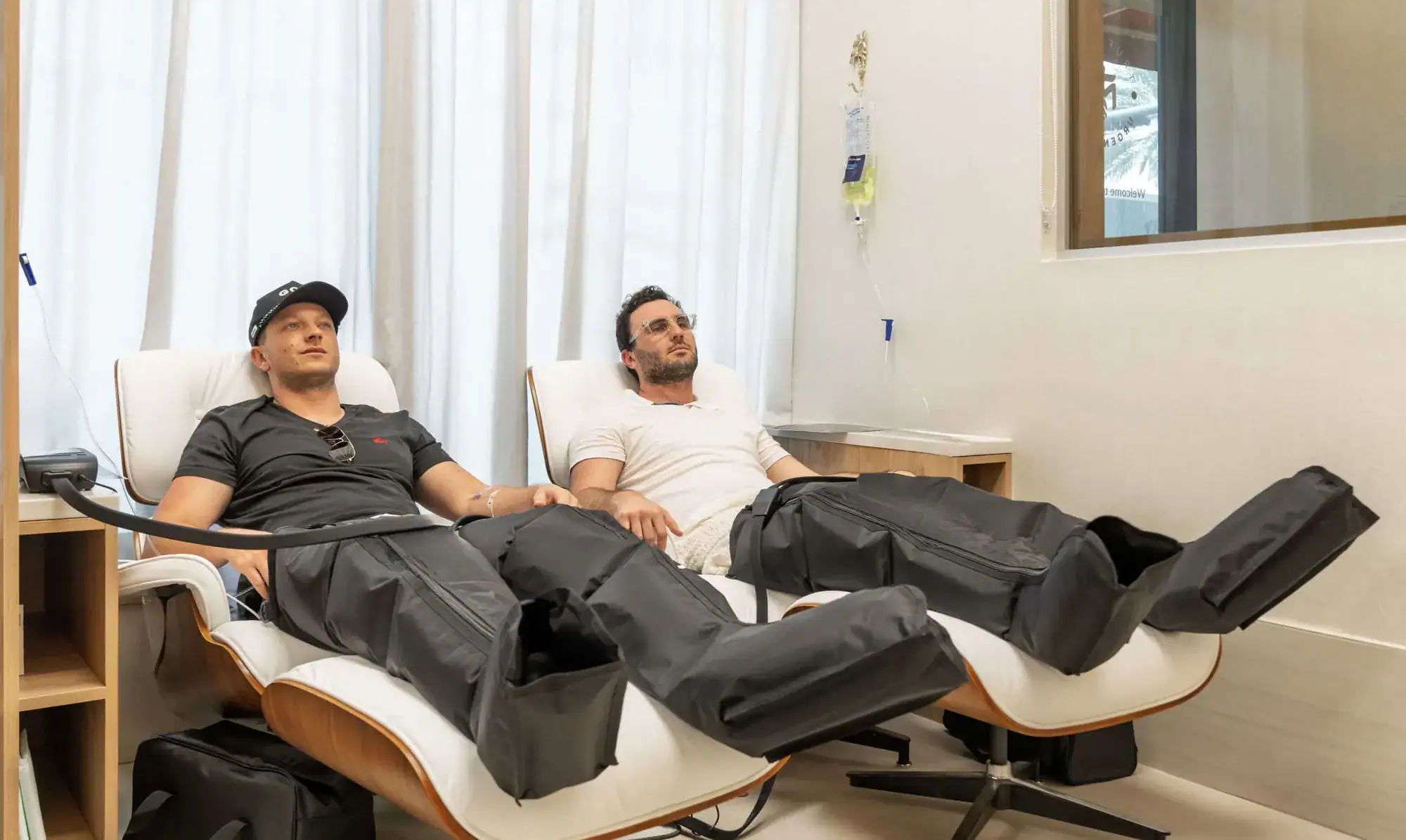
NAD+ IV Therapy
in Miami
A slow, monitored NAD+ infusion for cellular energy, healthy aging, and recovery, ordered and overseen by a board-certified physician at our Joint Commission-accredited clinic.
One flat price: $1,000 in-clinic, $1,250 mobile. No mg tiers, no surprise add-ons.
 Joint Commission Accredited
The only one in Florida
What does NAD+ IV therapy do?
A NAD+ IV delivers nicotinamide adenine dinucleotide directly into your bloodstream, bypassing the gut. At TrufaMED, physician-led NAD+ infusions support mitochondrial energy production, activate the sirtuin enzymes involved in DNA repair, and may help cognitive clarity and metabolic resilience. Sessions run two to four hours and are monitored by our clinical team throughout, in a Joint Commission-accredited clinic in Surfside or by mobile visit across South Florida.
Why patients choose a NAD+ infusion
NAD+ is a coenzyme your cells need for energy and repair, and its levels measurably decline from the mid-30s onward. An IV restores it directly, at concentrations oral precursors cannot reliably reach.
Cellular energy
NAD+ is a required substrate for mitochondrial electron transport, the process that powers your cells. Restoring declining levels supports ATP production, and many patients report improved energy within a day or two of an infusion.
Healthy aging
NAD+ activates the sirtuin enzymes tied to DNA repair and cellular maintenance. Replenishing it is a core part of a longevity-focused plan for patients who want to support both healthspan and lifespan.
Cognitive clarity
Preliminary human studies and substantial animal research suggest NAD+ repletion may support focus and mental clarity. The evidence here is emerging, and our physicians are explicit about what is established and what is not.
Recovery and addiction support
NAD+ infusion protocols are used as a supportive part of recovery and addiction-support programs, always directed by your treating physician and tailored to your clinical progress.
Athletic recovery
For high-performers managing slower recovery and reduced metabolic efficiency, NAD+ pairs with our other recovery services to support the cellular side of bouncing back from hard training.
Metabolic resilience
By supporting the enzymes that govern energy metabolism, NAD+ is used as one tool within a broader plan that still rests on sleep, nutrition, exercise, and stress management.
Research on NAD+ is evolving. We present what the current evidence supports and are explicit about where it remains preliminary. NAD+ IV is not FDA-approved as an anti-aging therapy and is administered as a wellness infusion under physician supervision.
NAD+ IV therapy cost
One protocol, one price. No mg-tiered upsells and no surprise add-ons. A single NAD+ IV session is $1,000 in-clinic at our Surfside clinic, or $1,250 delivered to you across South Florida.
NAD+ IV, In-Clinic
- Physician intake and order review
- Registered-nurse administration
- Continuous monitoring throughout
- Complimentary red light therapy
- Recline in our IV lounge
NAD+ IV, Mobile
- Delivered to your home, hotel, or office
- Physician-approved before dispatch
- Licensed provider, fully equipped
- Vitals and monitoring on site
- Across greater Miami and beyond
Red light therapy is included free with every in-clinic IV session. NAD+ IV is self-pay; we accept all major cards, HSA and FSA, and Apple Pay, and provide receipts on request. Looking for the full drip list? See the complete IV therapy menu.
Why intravenous, and not a pill?
NAD+ is the active coenzyme itself. The popular oral supplements, NMN (nicotinamide mononucleotide) and NR (nicotinamide riboside), are precursor molecules your body has to convert into NAD+ through several enzymatic steps. An IV delivers the active coenzyme straight into circulation, bypassing the conversion and reaching predictable blood concentrations that oral precursors cannot guarantee. The pharmacokinetics of an IV are meaningfully different from those of a pill.
Why we infuse slowly
NAD+ has to be given over two to four hours because a faster rate causes a chest-flutter sensation, warmth, and nausea. That slow, monitored delivery is the whole point of doing this in a medical setting. Our nursing team watches you continuously and adjusts the drip rate to keep you comfortable, and a board-certified physician reviews and approves the order before a line is ever started.
What NAD+ IV is not
Responsible medicine requires honesty. NAD+ IV is not FDA-approved for aging reversal, longevity, or disease treatment, and it is not a cure-all. No single infusion resolves chronic illness or replaces the foundations of metabolic health. It is a supportive therapy that works best inside a broader, physician-guided plan. See how it fits with NAD+ injections and the precursor drip, Niagen IV.
What to expect, start to finish
Before your session
Eat a light but substantial meal one to two hours beforehand. Arriving on an empty stomach makes the infusion harder to tolerate. For a first visit, consider arranging a ride home in case you feel fatigued afterward.
Physician intake
A board-certified physician reviews your history and goals and approves the order. Every IV at TrufaMED is physician-ordered; we do not start a line on a standing order alone.
During the infusion
A registered nurse places the line and starts a slow drip over two to four hours, monitoring you the whole time and adjusting the rate for comfort. In-clinic sessions include complimentary red light therapy alongside the drip.
After your session
Most patients feel steady and can drive home, though we suggest a ride for a first infusion. Many report improved energy and clarity over the following one to three weeks as cellular stores replenish.
Who benefits most, and who should wait
NAD+ IV is not for everyone, and that is the point. Our physicians help you decide whether your clinical picture makes you a strong candidate before your first infusion.
Strong candidates
- High-performers 35 and older noticing cognitive fatigue, slower recovery, or reduced metabolic efficiency
- Longevity-focused patients who want IV delivery for the pharmacokinetic precision oral precursors cannot match
- Patients in a physician-directed recovery or addiction-support protocol
- Athletes managing recovery as part of a broader plan
Reasons to wait or reconsider
- Adults under 25, where natural NAD+ levels are higher and the rationale is less established
- Anyone expecting a cure-all, since this is a supportive therapy
- Patients who have not first addressed sleep, nutrition, exercise, and stress
- Anyone a physician evaluates as not yet a candidate at intake
We administer NAD+ IV to adults 18 and older, with a thorough intake for every first-time patient. You do not need to be a concierge member; NAD+ IV is available to any patient.
A physician leads every session
Because NAD+ has real infusion effects, physician oversight is not optional. Every order is reviewed by a board-certified physician on shift, and a registered nurse administers and monitors the drip.
Dr. Gedalia built TrufaMED around physician-led protocols, Joint Commission accreditation, and a standard of care usually reserved for hospital systems. He oversees the IV therapy program and approves the formulary, including the NAD+ protocol.
Dr. Naidoo directs clinical operations and reviews complex infusions, including NAD+. His emergency background brings calm, decisive judgment to monitoring a long infusion and adjusting it the moment a patient needs it.
A board-certified physician leads every shift, seven days a week. This physician-first approach is why TrufaMED carries Joint Commission accreditation, a distinction held by only eight urgent care centers nationwide. Our lab is CLIA-certified.
NAD+ IV therapy, answered
What patients across Miami ask most before their first NAD+ infusion.
How long do the effects of a NAD+ IV last?
Effects vary by individual. Most patients report improvements in energy and mental clarity for one to three weeks after a single session. Patients with more significant NAD+ depletion, from age, alcohol history, or metabolic stress, may notice a shorter duration at first that lengthens with regular sessions as cellular NAD+ stores replenish.
How often should I get NAD+ IV therapy?
For general wellness and longevity support, our physicians typically recommend monthly sessions once initial repletion is established. Some patients begin with two to four sessions over a four to six week loading period before moving to monthly maintenance. For recovery and addiction-support protocols, frequency is set by your treating physician based on clinical progress. You receive a personalized schedule at intake.
What are the side effects of NAD+ IV therapy?
Known infusion-related effects include warmth or flushing in the chest and face, a chest-flutter or mild palpitation sensation, mild nausea, muscle tightness, and a general sense of restlessness. These are dose and rate dependent, and all respond to slowing the drip. Our nursing team monitors you continuously and adjusts the rate to keep you comfortable. The effects are transient and resolve when the infusion is slowed or stopped.
Why does my chest feel fluttery during the infusion?
The chest-flutter sensation is a well-documented, understood effect of IV NAD+. It is thought to result from NAD+ interacting with cardiac tissue during the brief window of peak circulating concentration. In otherwise healthy patients it is not a sign of cardiac danger, but it is exactly why we infuse slowly and why physician oversight matters. Tell your nurse if it becomes significant and the rate is reduced.
Can I combine NAD+ IV with other TrufaMED services?
Yes. NAD+ pairs well with hyperbaric oxygen therapy, which delivers oxygen to the tissues NAD+ is helping energize. It also works alongside our Myers’ Cocktail or Immune Boost drips on separate visits, or the same day for established patients at physician discretion. We do not stack multiple IV bags at once without physician evaluation. Ask your intake physician about a combined protocol.
Should I fast before my NAD+ IV session?
No, we recommend the opposite. Eat a light but substantial meal one to two hours before your session. Arriving on an empty stomach worsens the nausea associated with NAD+ infusion. A meal with protein, fat, and complex carbohydrates improves tolerability. Avoid heavy or greasy meals immediately before, and you do not need to fast for any part of this protocol.
Can I drive home after a NAD+ IV session?
Most patients drive home without difficulty. For your first infusion we suggest arranging a ride in case you feel fatigued or lightheaded afterward. After your first session you will know your individual response and can plan accordingly. Do not drive if you feel any impairment after leaving the clinic.
How is IV NAD+ different from NMN or NR supplements?
NAD+ is the active coenzyme itself. NMN and NR are precursor molecules that the body must convert into NAD+ through enzymatic pathways. An IV delivers the active coenzyme directly into circulation, bypassing those conversion steps and reaching predictable blood concentrations that oral precursors cannot guarantee. The pharmacokinetics of an IV are meaningfully different from those of a pill.
Does NAD+ IV therapy require a prescription?
At TrufaMED every IV infusion, including NAD+, is ordered by a physician. We do not administer IVs without a physician order, which is both our clinical standard and a legal requirement in Florida. The physician order is part of your visit, so there is no separate prescription to obtain in advance.
Is NAD+ IV covered by insurance or HSA/FSA?
NAD+ IV for wellness and longevity is generally not covered by standard health insurance. Some HSA and FSA plans allow IV therapy expenses, so check your plan documentation or ask your administrator. We provide detailed receipts and procedure codes to assist with submission. Payment is collected in full at the time of service. Call (305) 537-6396 with billing questions.
What patients say
Best clinic ever
Excellent. Attentive clean
The staff is very nice and courteous
Very nice receptionist
Best place I’ve been to by far great service
The staff are amazing, from front desk, registration, nurse , the Dr. A mean the facility very clean, conftuble, I'll give them 150% plus on everything and all. Thank you so very much
Care grounded in recognized authorities
Every NAD+ infusion at TrufaMED is compounded to medical-grade standards and supervised by a board-certified physician at a Joint Commission accredited facility.
A full-service medical clinic
Find us in Surfside
IV hours
Monday–Friday 9 AM – 9 PM
Saturday 11 AM – 11 PM
Sunday 12 PM – 8 PM
Allow two to four hours for a NAD+ session. Mobile NAD+ requires a booking.
Contact
Phone (305) 537-6396
WhatsApp +1 (305) 842-9801
Email [email protected]
NAD+ IV is self-pay. We accept all major cards, HSA and FSA, and Apple Pay.
Restore cellular energy with NAD+
Physician-supervised NAD+ IV in Surfside, or mobile to your home or hotel across South Florida. One flat price, monitored from start to finish.
Frequently asked questions
How long do the effects of NAD+ IV last?
Most patients report improvements in energy and mental clarity for 1-3 weeks following a single session. Frequency and duration of benefit are highly individual.
How much does NAD+ IV therapy cost in Miami?
TrufaMED NAD+ IV is $1,000 in-clinic at our Surfside facility, or $1,250 for mobile delivery to Miami Beach, Bal Harbour, and surrounding South Florida areas.
What is nicotinamide adenine dinucleotide and how is it different from NMN supplements?
NAD+ is the active coenzyme itself. NMN and NR are precursor molecules that must be enzymatically converted. IV NAD+ delivers the coenzyme directly into circulation at predictable concentrations that oral precursors cannot guarantee.
Is NAD+ IV covered by insurance?
NAD+ IV for wellness is not typically covered by standard health insurance. Some HSA and FSA plans allow IV therapy expenses. Contact TrufaMED at (305) 537-6396 for billing questions.
Notes from your physicians, every other week.
Seasonal health for South Florida, what we are seeing at the clinic, and the occasional thing worth knowing. No spam, and you can leave anytime.
TrufaMED, in your pocket.
Book urgent care, IV therapy, HBOT and telehealth, track your wellness, and reach your care team, all from the app.