
Services
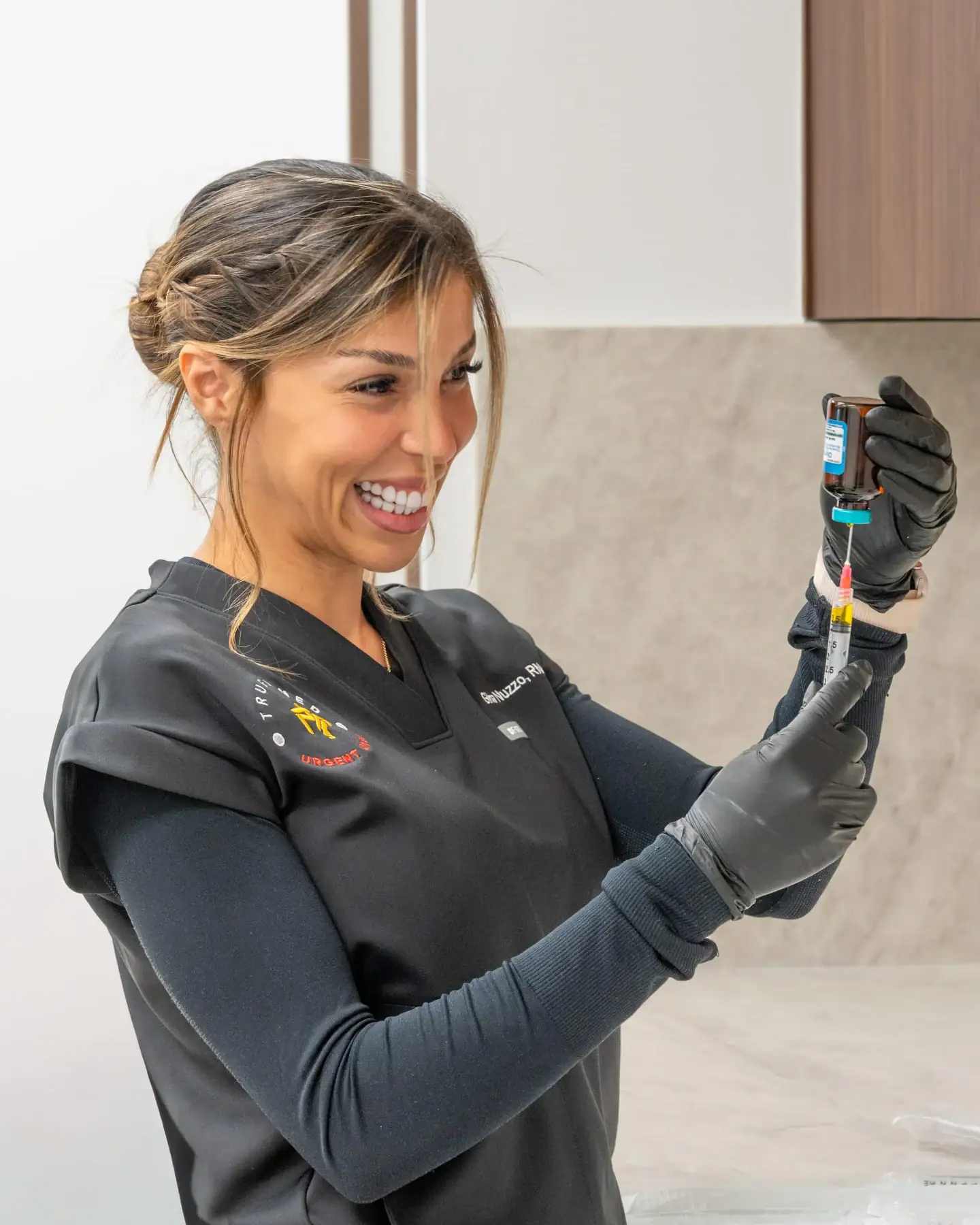
Dehydration Treatment
and IV Fluids
Same-visit physician evaluation and IV fluid therapy for dehydration. Lactated Ringers, normal saline, and anti-nausea medication, started on-site when drinking is not keeping up. Walk in, no appointment needed.
Physician visit from $195. Most insurance accepted when IV fluids are medically indicated.
 Joint Commission Accredited
The only one in Florida
Can I walk in for IV fluids today?
Yes. TrufaMED treats dehydration with IV fluid therapy under physician supervision, seven days a week, with no appointment needed. A typical visit, the physician evaluation, IV placement, a Lactated Ringers or saline infusion, and discharge, runs about 90 minutes. When drinking has stopped working, because of vomiting, severe diarrhea, heat illness, or a stubborn stomach bug, IV fluids restore volume in minutes rather than hours.
A board-certified physician evaluates you, selects the right crystalloid, adds anti-nausea medication such as ondansetron when needed, and monitors your vitals through the infusion. This is medical care.
When dehydration needs an IV
Most mild dehydration responds to oral rehydration, small sips of an electrolyte solution every few minutes. IV therapy is for moderate to severe dehydration, or when oral intake is failing. Our physicians judge severity from vitals, exam findings, and basic labs when indicated.
- Cannot keep fluids down for 4 hours or more
- Lightheadedness when standing (orthostasis)
- Resting heart rate above 100 without a fever
- No urination in 8 hours or more
- Dry mouth, cracked lips, or skin tenting
- Sunken eyes, or a deep sunken soft spot in infants
- Fatigue out of proportion to the illness
- Nausea or vomiting that breaks every oral attempt
- Recent heat exposure with cramping, headache, or weakness
- Diarrhea lasting 48 hours or more in an adult
The single best predictor of moderate dehydration is orthostatic vital signs: a rise in heart rate of 20 beats per minute or more, or a drop in systolic blood pressure of 20 mmHg or more, when moving from sitting to standing. Our physicians measure this when the exam raises concern, and confirm borderline cases with labs. In most cases, the exam alone tells us what you need.
Which IV fluid, and why
Not all IV fluids are the same. The choice depends on the reason for the dehydration, your labs, and any medications you take. Our physicians select from the clinical picture.
| Fluid | CompositionWhat is in it | IndicationBest for |
|---|---|---|
| Lactated Ringers | Sodium, chloride, potassium, calcium, and lactate. Buffered and near-physiologic. | Most dehydration, heat illness, large-volume replacement, post-viral, food poisoning. |
| Normal Saline 0.9% | Sodium chloride, no buffer. | Short infusions, certain electrolyte patterns, vomiting with metabolic alkalosis, medication dilution. |
| D5 in 0.45% Saline | Half-normal saline plus dextrose. | Pediatric maintenance, low blood sugar, prolonged periods with nothing by mouth. |
| D5 in Water | Dextrose in sterile water. | Free-water replacement, certain medication infusions, specific sodium conditions. |
Beyond fluids, our physicians commonly order adjuncts: ondansetron (Zofran) to stop vomiting, metoclopramide (Reglan) for delayed gastric emptying, IV potassium when labs show a deficit, and magnesium sulfate when cramping or migraine accompanies the dehydration. Vitamin-containing drips such as B-complex and thiamine are added when the presentation calls for them.
Medical IV for dehydration, or an elective wellness drip?
If you are clinically dehydrated, you want a medical evaluation first, and that visit is often covered by insurance. If you simply want the lift of IV hydration without being unwell, our wellness drips are the right path, billed as a cash-pay service.
Medical IV for dehydration begins with a physician examining you, choosing the fluid, and monitoring your vitals. When it is clinically indicated, most major plans cover it as a standard urgent care visit. That is what this page is about.
Separately, TrufaMED runs a full elective wellness IV menu for patients who are not clinically dehydrated but want the benefits of IV hydration. The entry-level Rehydrate IV is a one-liter saline drip from $200, and Rehydrate+ uses Lactated Ringers from $225 for heavier recovery. The complete IV therapy menu also includes the Myers’ Cocktail, NAD+, and a Hangover Recovery drip. Those are wellness services and are cash-pay. If you are unwell enough to need fluids, start with a walk-in medical visit instead.
Why IV works faster when drinking fails
For mild dehydration, oral rehydration is just as effective and less invasive. For moderate to severe cases, where you cannot drink or your losses are outpacing what you take in, IV fluids deliver measured volume straight to the bloodstream and bypass a gut that is not cooperating.
Oral rehydration
The World Health Organization oral rehydration solution, glucose plus sodium, is the standard for non-severe dehydration. It works because glucose carries sodium across the gut wall, and water follows. The same mechanism runs in products like Pedialyte and Liquid IV. In otherwise healthy adults and children, oral rehydration matches IV rehydration in outcome for mild to moderate cases.
When oral is the right choice: small, frequent sips, a tablespoon every five minutes, never large gulps. Avoid plain water in severe dehydration, because it dilutes sodium and can worsen the electrolyte balance.
IV rehydration
IV fluids are direct. They enter the bloodstream immediately, restore circulating volume, and support blood pressure. A patient who cannot keep down sips can still tolerate an IV. When losses outpace intake, from severe diarrhea, heat exhaustion, or persistent vomiting, IV volume replacement is what lets the body catch up.
A typical adult dose is 1 to 2 liters of Lactated Ringers over 30 to 90 minutes, titrated to heart rate, blood pressure, and how you respond. Pediatric dosing is calculated per kilogram. Most adults are back on oral fluids by the end of the infusion; the most severe cases need a second liter or electrolyte correction.
Anyone with an IV license can place a line. The clinical judgment of which fluid, how much, and when to escalate is the physician’s job: avoiding over-resuscitation in a patient with heart failure, covering ongoing losses, catching hyponatremia in a runner, withholding potassium from someone already hyperkalemic. Those are the errors that happen in wellness clinics without physician oversight.
What brings people in for IV fluids
South Florida’s heat and tourism drive a steady mix of dehydration. Our physicians see these every day.
Heat illness
Heat exhaustion from the beach, outdoor workouts, construction work, or a long day on your feet. Early IV fluids plus active cooling keep it from progressing to heat stroke.
Stomach flu
Post-viral gastroenteritis that has had you vomiting for one to three days. Ondansetron plus 1 to 2 liters of fluid usually resolves the cycle, and most patients leave tolerating sips of water. Stomach flu care.
Food poisoning
Bacterial or toxin-related illness, usually 6 to 24 hours after a suspect meal. We treat with IV fluids and anti-nausea medication, and evaluate to rule out other causes of the same symptoms.
Migraine with nausea
IV fluids, magnesium sulfate, and anti-nausea medication break most migraine episodes. Our physicians run the full protocol in a single visit. Migraine treatment.
Endurance and exercise
A marathon, triathlon, or long beach run with too little fluid replacement. Careful IV management also avoids the opposite mistake, hyponatremia from drinking too much.
Hangover with real symptoms
When a hangover crosses into clinical dehydration with vomiting, that is a medical visit. It is distinct from our elective Hangover Recovery drip, which is a cash-pay wellness service.
Dehydration care for children
Children dehydrate faster than adults and recover faster when treated promptly. Our physicians see children daily through our pediatric urgent care service.
Start oral first, usually
For mild to moderate pediatric dehydration, oral rehydration with a proper solution like Pedialyte or CeraLyte is first-line. Frequency is what matters: a teaspoon every minute or two works, a full cup every ten minutes does not. A dose of ondansetron can break the vomiting and let oral rehydration succeed, avoiding the IV entirely.
When an IV is necessary
IV fluids are indicated when oral rehydration has failed over several attempts, when dehydration is severe, with lethargy, sunken eyes, poor skin turgor, or reduced urine, or when ongoing vomiting outpaces what the child can drink. We calculate pediatric doses by weight, usually a 20 mL per kilogram bolus repeated as needed, and monitor closely.
Infants under three months
Any infant under three months with a concerning symptom, fever, lethargy, poor feeding, or fewer wet diapers, is evaluated urgently. We keep a low threshold for transferring very young infants to pediatric emergency care, while handling the full course in clinic for most older infants and toddlers with ordinary stomach flu.
When dehydration becomes an emergency
Most dehydration is urgent-care level. Some is not. The findings below move care from urgent care to the emergency department, and a few warrant calling 911.
Go to the ER or call 911 if you have:
- Confusion, altered mental state, or trouble staying awake
- Signs of shock: cold clammy skin, a rapid weak pulse, low blood pressure
- Chest pain, severe shortness of breath, or cardiac symptoms
- Suspected heat stroke: altered mental state with a high body temperature
- Severe abdominal pain with guarding or rigidity
- Vomiting blood, or black or bloody stool
- Diabetes with signs of diabetic ketoacidosis
- An infant under three months with severe dehydration or high fever
If you are not sure, come in. We triage on arrival and move patients to the ER when the findings warrant it. A same-day physician evaluation is worth it when the alternative is missing a heat stroke or a surgical abdomen.
A medical clinic, not a wellness bar
Most IV therapy locations are wellness lounges. TrufaMED is a medical clinic. The difference matters when your dehydration is actually a medical problem that deserves physician-level diagnosis.
Florida’s only accredited urgent care
Joint Commission accreditation, the same body that accredits hospitals, audits our sterile technique, medication safety, infection control, and clinical protocols. We are the only urgent care in Florida to hold it.
Physician-led every visit
A board-certified physician leads every shift and oversees your care. The program is directed by Dr. Uri Gedalia, our Chief Medical Officer, and Dr. Shane Naidoo, our emergency-medicine Medical Director.
Covered when it is medical
When IV fluids are clinically indicated, it is a covered urgent care service under most major plans: Aetna, Cigna, United Healthcare, Humana, Oscar, and Medicare. We quote self-pay up front, with no surprise billing.
We escalate when it is right
Most dehydration is safely managed in urgent care. Cases that need the ER, shock, electrolyte emergencies, a suspected surgical abdomen, are identified quickly and transferred. We do not send patients home unstable.
On-site labs and imaging
When dehydration is complicated by fever, pain, or a question about another diagnosis, on-site lab testing and digital X-ray close the loop in a single visit.
Medical first, not a menu
Wellness IV has its place, and we offer it separately through our IV therapy service. For actual dehydration, you want a medical evaluation first.
A physician evaluates you before any fluids run
Fluid choice, dosing, and the decision to escalate are clinical judgments. At TrufaMED a board-certified physician evaluates you and signs off on the order before a licensed provider places the line.
Dr. Gedalia built TrufaMED around physician-led protocols, Joint Commission accreditation, and a standard of care usually reserved for hospital systems. He oversees the urgent care and IV programs and the fluid and medication formulary.
Dr. Naidoo directs clinical operations and supervises the nursing team. His emergency background means dehydration, electrolyte correction, and knowing when a case needs the ER are second nature, and he brings calm, decisive judgment to every visit.
A board-certified physician leads every shift, seven days a week. This physician-first approach is why TrufaMED carries Joint Commission accreditation, a distinction held by only eight urgent care centers nationwide. Our lab is CLIA-certified.
Dehydration IV questions, answered
The questions our physicians answer most often about IV fluid therapy for dehydration.
How fast does IV rehydration work?
Most patients feel meaningful improvement within 30 to 60 minutes of starting the infusion. Heart rate slows, blood pressure stabilizes, and lightheadedness fades. A full 1 to 2 liter infusion usually takes 45 to 90 minutes. When vomiting is the problem, ondansetron given at the start of the IV often works within 15 minutes, breaking the nausea cycle before the fluid even finishes.
Does insurance cover IV fluids for dehydration?
When IV fluids are medically indicated and documented by a physician evaluation, most major plans cover them as a standard urgent care service, including Aetna, Cigna, United Healthcare, Humana, Oscar Health, and Medicare. Our front desk verifies your benefits at check-in and explains out-of-pocket expectations before treatment. Elective wellness IV, such as a Myers’ Cocktail or NAD+, is a separate cash-pay service.
How is this different from a wellness IV bar?
A wellness IV bar sells drips off a menu with no physician evaluation. TrufaMED is a medical clinic. Fluids are ordered under physician oversight, and an MD is in clinic every hour we are open. The fluid is chosen from your exam, your vitals are monitored throughout the infusion, and the visit is documented as medical care. That medical visit is often covered by insurance; a wellness bar is always out of pocket.
Can children get IV fluids here?
Yes. We treat pediatric patients daily. Our first step in children is oral rehydration plus ondansetron, which resolves most cases without an IV. When fluids are needed, after oral rehydration has failed, in severe dehydration, or with ongoing vomiting, we place pediatric IVs and dose by weight. Infants under three months with severe symptoms are evaluated and typically referred to pediatric emergency care.
How long does a dehydration IV visit take?
A typical visit runs 75 to 120 minutes. The physician evaluation and IV placement take the first 20 minutes or so, the fluid infusion runs 45 to 90 minutes, and final vitals plus written discharge instructions take about 10 minutes. Complicated cases that need labs or extended monitoring can run longer.
Do you use normal saline or Lactated Ringers?
Lactated Ringers is our default for most dehydration because it is buffered and closer to the body’s natural blood composition. Normal saline suits shorter infusions, certain electrolyte patterns, or cases where a concurrent medication requires it. Dextrose-containing fluids are reserved for specific pediatric and maintenance situations. Your physician selects the right fluid from your exam and, when needed, your labs.
Can I just drink Gatorade instead?
For mild dehydration, oral rehydration works, and that is the right first move. Gatorade is not ideal, too much sugar and not enough sodium for severe cases, but it beats plain water when nothing else stays down. The rule of thumb: if you can keep down small sips of any fluid, try oral first. When vomiting breaks every attempt, or symptoms worsen despite drinking, that is when IV fluids become necessary.
Do you treat heat exhaustion or heat stroke?
Heat exhaustion, with fatigue, heavy sweating, headache, mild nausea, and a normal or slightly elevated temperature, is handled in our urgent care. We cool you, give IV fluids, and observe. Heat stroke, with altered mental status and a dangerously high core temperature, is an emergency. We begin cooling and IV fluids while arranging transfer to the ER. For any suspected heat illness, come in right away, because early fluids and cooling prevent it from progressing.
Will I need bloodwork?
Most dehydration does not require labs to treat. We draw a basic panel when the picture is unusual, when a patient is elderly or on diuretics, when diabetic ketoacidosis is a concern, or when an electrolyte problem is likely from your symptoms or medications. Our on-site lab returns those results in minutes, so IV therapy is not delayed while we wait.
Can I walk in, or do I need an appointment?
Walk in, no appointment needed. We run as an urgent care seven days a week. You can also check in online through our patient portal to reserve your spot and cut your wait. Hours are Monday through Friday 9 AM to 9 PM, Saturday 11 AM to 11 PM, and Sunday 12 PM to 8 PM.
What patients say
Best clinic ever
Excellent. Attentive clean
The staff is very nice and courteous
Very nice receptionist
Best place I’ve been to by far great service
The staff are amazing, from front desk, registration, nurse , the Dr. A mean the facility very clean, conftuble, I'll give them 150% plus on everything and all. Thank you so very much
Care grounded in recognized authorities
Every infusion is physician-ordered and follows standards set by national health authorities.
A full-service urgent care
Find us in Surfside
Walk-in hours
Monday–Friday 9 AM – 9 PM
Saturday 11 AM – 11 PM
Sunday 12 PM – 8 PM
No appointment needed. Check in online to reserve your spot and cut your wait.
Contact
Phone (305) 537-6396
WhatsApp +1 (305) 842-9801
Email [email protected]
For a life-threatening emergency, call 911. TrufaMED treats non-life-threatening conditions.
Dehydrated? Walk in.
Physician evaluation, IV fluids, and anti-nausea medication in a single urgent care visit. No appointment needed, seven days a week, with most insurance accepted.
Notes from your physicians, every other week.
Seasonal health for South Florida, what we are seeing at the clinic, and the occasional thing worth knowing. No spam, and you can leave anytime.
TrufaMED, in your pocket.
Book urgent care, IV therapy, HBOT and telehealth, track your wellness, and reach your care team, all from the app.