
Services
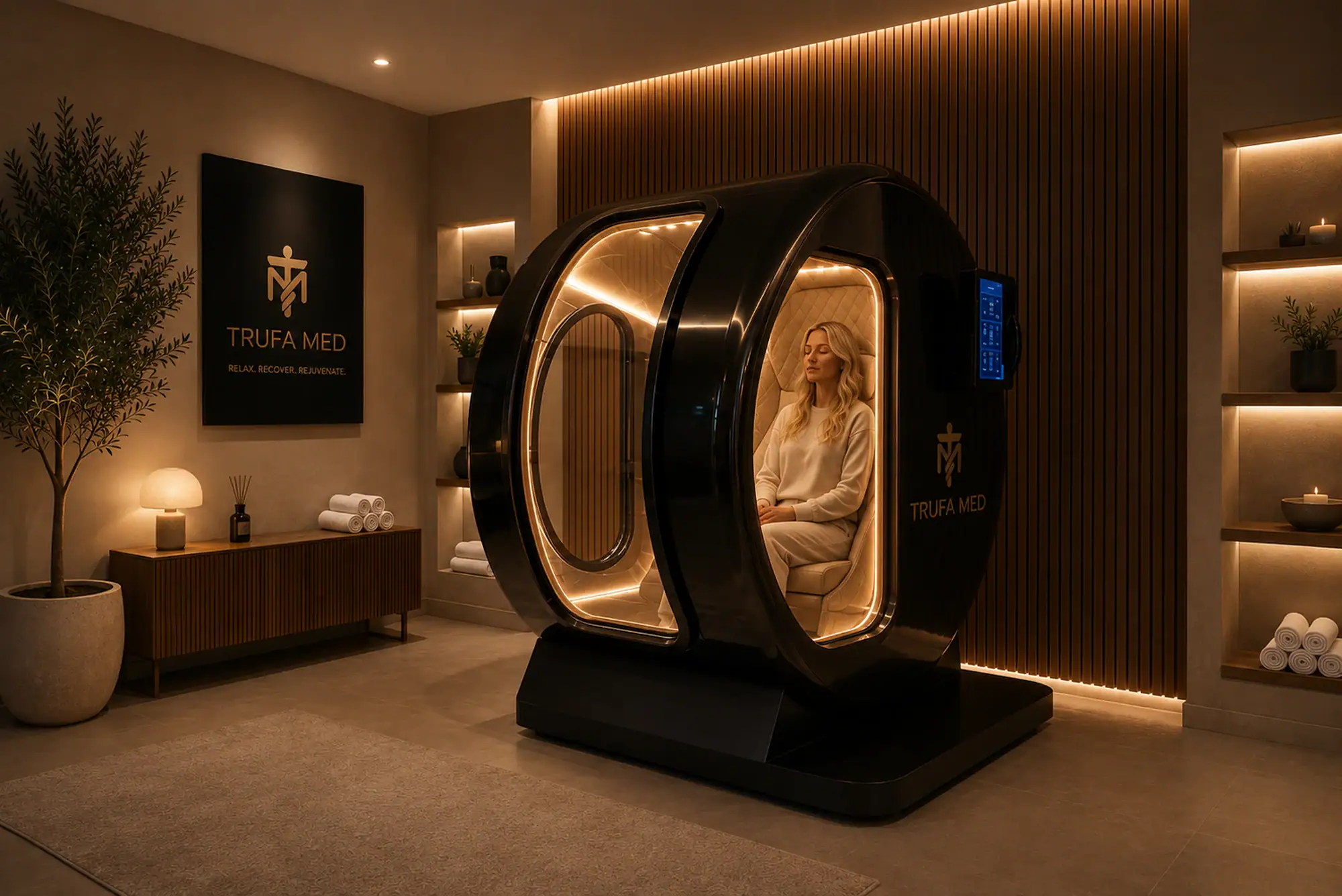
HBOT for
Long COVID
A physician-supervised protocol for the symptoms that linger after COVID-19: fatigue, brain fog, breathlessness, and reduced exercise tolerance. Hard-chamber oxygen, designed and overseen by a board-certified physician at our Surfside clinic.
HBOT is supportive, emerging care for long COVID, not a cure. Candidacy is confirmed by a physician exam first.
 Joint Commission Accredited
The only one in Florida
Can HBOT help after COVID-19?
For some patients, it may. Hyperbaric oxygen therapy is a supportive, emerging treatment for long COVID, the cluster of symptoms that can persist for weeks or months after the infection itself clears. It is not a cure, and the evidence is still developing. The symptoms patients bring to us most often are persistent fatigue, brain fog, reduced exercise tolerance, breathlessness, disrupted sleep, and lingering chest discomfort, and these are increasingly linked to real cellular changes: chronic inflammation, low tissue oxygen, small-vessel damage, and struggling cellular energy production.
Those mechanisms are exactly why HBOT is studied for long COVID. Under pressure, 100% pure oxygen dissolves into your blood plasma and reaches tissue that compromised circulation cannot, including deep brain regions, lung tissue, and small peripheral vessels. At TrufaMED in Surfside, long COVID HBOT is delivered under physician design and supervision at our Joint Commission-accredited clinic, not the unsupervised wellness-center setting, with a board-certified physician overseeing every protocol. Results vary, and your physician sets honest expectations for your case before any session begins.
Why long COVID may respond to oxygen under pressure
Long COVID is not one condition but a cluster of symptoms, and research increasingly traces them to a few cellular drivers. These are the pathways HBOT is studied to support, each one explored under physician guidance rather than promised as an outcome.
Reaching low-oxygen tissue
Under pressure, oxygen dissolves directly into blood plasma and reaches tissue where normal red-cell circulation has been compromised. That directly counteracts the low-oxygen cellular environment thought to sustain many post-COVID symptoms.
Calmer inflammation
Persistent inflammation is one of the more consistent findings in long COVID. Hyperbaric oxygen is studied for its ability to quiet that inflammatory activity, which researchers measure through markers such as CRP, IL-6, and TNF-alpha.
Cellular energy support
The fatigue and brain fog that define long COVID are linked in part to struggling mitochondria, the energy machinery inside cells. Restoring oxygen supply is one way HBOT is thought to support cellular energy production.
Microvascular repair
COVID-19 can damage the smallest blood vessels. Sustained high oxygen levels signal the body to build new capillary networks, the kind of circulation that carries recovery forward after a session ends.
Published research on HBOT for post-acute COVID symptoms has reported directional improvement in fatigue, thinking, and exercise tolerance for some patients. These findings are encouraging, not guarantees, and individual response varies with how long symptoms have lasted, their severity, and other health factors. Your physician discusses what is realistic for your specific case during your evaluation.
How your physician tracks progress
Because long COVID recovery is gradual and varies so much from person to person, progress is measured against objective markers rather than how you feel on a single day.
Before the protocol
- Full physical exam and medical history review
- Current medication review
- On-site chest X-ray to confirm you are cleared
- Baseline labs where indicated, such as CRP and ferritin
- A validated fatigue scale and a six-minute walk test as a baseline
During and after
- Symptom check-ins at the protocol review points
- Repeat fatigue scoring to compare against baseline
- A repeat six-minute walk test for exercise tolerance
- Repeat inflammatory markers where indicated
- Cognitive and sleep measures when they apply to your case
What recovery can look like over time
Long COVID recovery is gradual, and it is different for everyone. This is a general progression, not a promise. Your physician sets and adjusts your plan based on your clinical picture.
Sessions 1 to 5
Your body adapts to pressurized oxygen. Some patients feel a little extra tiredness early on, which is normal, and some notice improved sleep almost right away. Your physician confirms you tolerate therapy well.
Sessions 6 to 15
This is where many patients first describe meaningful change: less brain fog, gradually steadier energy, and better exercise tolerance. Your physician checks in and may repeat baseline markers.
Sessions 16 to 30
Any measurable shifts in inflammatory markers and exercise tolerance tend to appear in this range for patients who respond. Repeat testing is compared against your baseline.
Sessions 30 and beyond
Many patients complete the core protocol here, and some move to a lower-frequency maintenance schedule. Your physician tailors this to your response curve rather than a fixed formula.
Who comes to us for long COVID HBOT
Adults with symptoms that persist four or more weeks after an acute infection may be candidates. These are the patterns our physicians see most, each one screened and planned individually.
Persistent fatigue
People whose energy never returned after COVID-19, who tire quickly through the day, and who want a structured, supervised approach rather than waiting it out indefinitely.
Brain fog and focus
Patients with lingering trouble concentrating, word-finding, and memory who are looking for support alongside their primary-care or neurology plan.
Reduced exercise tolerance
Active adults who cannot get back to their prior level of activity, who feel breathless or wiped out by effort that used to be easy, and want to rebuild carefully.
Long-haulers after a mild case
People whose original infection was mild but whose symptoms have lasted, a common and frustrating pattern that still warrants a proper evaluation.
Recovery after a severe course
Patients rebuilding after a hospitalized or severe COVID-19 illness, working back toward daily function with physician oversight.
Patients seeking honesty
People who want a clinic that calls HBOT what it is for long COVID: supportive, emerging care with a real but developing evidence base, delivered with realistic expectations.
HBOT does not treat an active COVID-19 infection and is for non-life-threatening recovery needs. For a true emergency, call 911.
How a long COVID HBOT visit works
From the evaluation that confirms you are a candidate to your follow-up sessions, here is what to expect at the Surfside suite.
Evaluation and clearance
Your first visit includes a full physical exam, a medical and injury-history review, a medication review, and an on-site chest X-ray to confirm you are cleared. Baseline labs and a fatigue or walk-test score may be recorded.
Settle into the chamber
You change into loose cotton clothing and leave electronics and jewelry outside. You lie comfortably in the soft-shell chamber, free to rest, listen, or close your eyes.
Pressure and pure oxygen
The chamber pressurizes to 1.6 ATA while you breathe 100% pure oxygen. You may feel a mild ear fullness that clears the way it does on a plane. Therapy is physician-supervised throughout.
Track and adjust
A session runs 60 to 90 minutes. Your physician reviews your markers at the protocol review points and adjusts the plan to your response rather than a fixed schedule.
Why a hard clinical chamber matters
HBOT for long COVID is being offered casually around Miami, often by spas with no physician and soft portable chambers that cannot reach therapeutic pressure. The chamber and the oversight are what make it a clinical treatment.
TrufaMED clinical HBOT
- Physician-supervised soft-shell chamber
- 1.6 ATA on 100% oxygen (hard-shell 3.0 ATA arriving late August 2026)
- 100% pure oxygen delivered to the patient
- Physician exam, history, and chest X-ray first
- Every session supervised at an accredited facility
Unsupervised spa or home units
- No physician evaluation or supervision
- Much lower pressure, near sea-level air
- Ambient air rather than pure oxygen
- Often no medical clearance or screening
- Typically unsupervised, with no clinical oversight
HBOT works best alongside other recovery care
Long COVID rarely has a single fix. HBOT tends to help most as one part of a coordinated plan your physician builds with you.
IV therapy
Many patients pair HBOT with IV therapy such as Immune Boost, NAD+, or a Myers’ Cocktail to support cellular energy and hydration. Complimentary red light therapy is included with every in-clinic IV session.
Graded activity
Carefully paced activity, guided by your own physician, helps rebuild exercise tolerance without triggering setbacks. HBOT is meant to support that work, not replace it.
Sleep and stress support
Poor sleep and ongoing stress keep inflammatory pathways active. Addressing them gives the rest of your recovery plan, HBOT included, a better foundation to work from.
Targeted nutrition
Based on your lab work, your physician may suggest specific nutritional supports. The aim is a plan matched to your body, not a generic supplement list.
Transparent rates, no surprises
HBOT for long COVID is direct-pay. Most plans treat it as investigational for this use and do not cover it, so we keep pricing simple. We provide documentation if you want to submit for reimbursement.
The required evaluation before any long COVID protocol. Your physician confirms HBOT is appropriate, then you begin the same day if cleared. No package deposit is kept if you are disqualified on medical grounds.
Book first sessionMost patients begin with the package and extend based on goals and response. A long COVID protocol commonly continues well beyond ten sessions.
Reserve the packageFor sessions beyond the package, or for the lower-frequency maintenance schedule some patients move to once the core protocol is complete.
Book a follow-upConcierge members receive member pricing on HBOT. See our concierge memberships, the full HBOT service page, or our insurance page.
When HBOT may need to wait
Being honest about contraindications is part of doing this right. A few conditions can rule out therapy or require treatment first, which is exactly why the exam and on-site chest X-ray come before your first session, not after a deposit.
An untreated collapsed lung (pneumothorax) is a strict contraindication, since pressurization can be dangerous. Certain active lung diseases, an active sinus or ear infection that blocks pressure equalization, an uncontrolled high fever, and certain chemotherapy medications in your system also need to be addressed first. Your physician screens for all of these during your initial evaluation. If HBOT is not appropriate for your case, we tell you at the consultation, before charging for a full package, and no deposit is kept when you are disqualified on medical grounds.
The physicians overseeing your recovery
Your long COVID protocol is designed and supervised by two board-certified physicians whose combined experience spans emergency medicine, trauma, critical care, surgery, and wound care.
Dr. Naidoo brings extensive adult and pediatric emergency, trauma, and critical-care experience from high-volume emergency departments across the East Coast. Emergency physicians manage the respiratory and cardiac complications of COVID-19 firsthand, which is exactly the judgment you want screening and supervising a long COVID protocol.
Dr. Gedalia earned his medical degree from Louisiana State University and completed his surgical residency at St. Vincent’s Hospital in New York. He serves as Regional Chief Medical Officer for a surgical and wound-care program, experience that shapes how TrufaMED builds and oversees its HBOT protocols.
A physician supervises every session at our Joint Commission-accredited facility, a distinction held by only eight urgent care centers in the United States, the same standard applied to major hospitals.
Recovering from something else?
HBOT supports a range of recovery goals. Explore a dedicated page, or read how the therapy works in our benefits guide.
What patients ask first
The questions patients across Miami, Miami Beach, Bal Harbour, and Surfside ask before starting a long COVID protocol.
Does HBOT actually help long COVID?
It may support recovery for some patients, and it is best understood as a supportive, emerging therapy rather than a cure. Hyperbaric oxygen therapy is one of the more actively studied interventions for post-acute COVID symptoms, and controlled research has reported directional improvement in fatigue, thinking, and exercise tolerance. Results vary by person, and the evidence is still developing. HBOT works by delivering oxygen to tissue that compromised circulation cannot reach, calming inflammation, and supporting the cellular energy machinery that lingering symptoms disrupt. Your physician sets realistic expectations for your specific case during your evaluation.
Is HBOT proven for long COVID, or is it experimental?
It is promising and still developing, not established. For long COVID specifically, most plans consider HBOT off-label, supportive care rather than a proven cure, and we are honest about that distinction. Published studies are encouraging, but individual response depends on how long symptoms have lasted, their severity, and other health factors. We will tell you plainly whether HBOT is reasonable for your situation before you commit to a course.
What long COVID symptoms might HBOT help with?
The symptoms patients most often bring to us are persistent fatigue, brain fog and difficulty concentrating, reduced exercise tolerance, breathlessness, disrupted sleep, and lingering chest discomfort. These are the post-acute symptoms HBOT is studied for, because they are linked to inflammation, low tissue oxygen, and cellular energy problems that oxygen under pressure is suited to address. HBOT does not treat an active COVID-19 infection.
How many HBOT sessions are recommended for long COVID?
Most long COVID protocols at TrufaMED run 20 to 40 sessions over 8 to 12 weeks, often 3 to 5 sessions per week in the early phase, at 1.6 ATA for 60 to 90 minutes each. Your physician adjusts the total based on symptom severity, how long symptoms have lasted, and your response at the review points. This is a longer course than a general wellness package, which is why a physician designs it around your clinical picture.
How quickly will I notice results?
Some patients report better or deeper sleep within the first several sessions. Broader gains in energy, thinking, and exercise tolerance more often emerge gradually across the middle of the protocol, and any change is tracked against your baseline rather than how you feel on a single day. Because recovery is gradual and varies widely, your physician measures objective markers at baseline, mid-protocol, and end-of-protocol.
Who is a candidate for long COVID HBOT?
Adults with symptoms that persist four or more weeks after an acute COVID-19 infection may be candidates, including those with a confirmed long COVID diagnosis, long-haulers whose original infection was mild, and patients recovering after a severe or hospitalized course. Candidacy is always confirmed by a physician exam and an on-site chest X-ray first, so contraindications can be ruled out before any session.
Are there reasons I might not be a candidate for HBOT?
Yes. A few conditions can rule out therapy or require treatment first, including an untreated collapsed lung (pneumothorax), certain active lung diseases, an active sinus or ear infection that blocks pressure equalization, an uncontrolled high fever, and certain chemotherapy medications in your system. This is exactly why a physical exam and on-site chest X-ray are required before your first session. If HBOT is not appropriate for you, we tell you at the consultation, and no package deposit is kept when you are disqualified on medical grounds.
Is HBOT safe?
Hyperbaric oxygen therapy has a strong safety profile under proper medical supervision. The most common sensation is mild ear fullness during pressurization, which clears the way it does on an airplane. Every patient is screened with a full physical exam, a medical and medication history, and an on-site chest X-ray before the first session, and therapy is supervised by a physician at our Joint Commission-accredited facility.
Can I combine HBOT with other long COVID care?
Yes, and we encourage it. HBOT tends to work best as part of a broader recovery plan. Many patients pair it with IV therapy such as Immune Boost, NAD+, or a Myers’ Cocktail, with complimentary red light therapy included on every in-clinic IV session, alongside graded activity under their own physician, sleep support, and targeted nutrition. Your physician coordinates these around your protocol and your response.
Is long COVID HBOT covered by insurance?
Most commercial insurance plans do not cover HBOT for long COVID, since it is still considered investigational for this indication despite growing clinical evidence. TrufaMED is self-pay with transparent pricing: $300 for the first visit (exam, on-site chest X-ray, and first session), $150 per follow-up, and $1,000 for the 10-session package. We provide documentation if you want to submit for reimbursement.
What patients say
Best clinic ever
Excellent. Attentive clean
The staff is very nice and courteous
Very nice receptionist
Best place I’ve been to by far great service
The staff are amazing, from front desk, registration, nurse , the Dr. A mean the facility very clean, conftuble, I'll give them 150% plus on everything and all. Thank you so very much
Care grounded in recognized authorities
TrufaMED is a Joint Commission accredited clinic, and our hyperbaric protocols reference peer-reviewed evidence and federal guidance. These independent sources are offered for further reading.
Find the right care
Find us in Surfside
Hours
Monday–Friday 9 AM – 9 PM
Saturday 11 AM – 11 PM
Sunday 12 PM – 8 PM
HBOT sessions are by appointment. Same-week availability is common.
Contact
Phone (305) 537-6396
WhatsApp +1 (305) 842-9801
Email [email protected]
For a life-threatening emergency, call 911. TrufaMED treats non-life-threatening conditions.
Start with a long COVID evaluation
Begin with a physician exam that confirms whether HBOT fits your recovery, then proceed with a supervised, clinical-grade protocol at an accredited facility.
Notes from your physicians, every other week.
Seasonal health for South Florida, what we are seeing at the clinic, and the occasional thing worth knowing. No spam, and you can leave anytime.
TrufaMED, in your pocket.
Book urgent care, IV therapy, HBOT and telehealth, track your wellness, and reach your care team, all from the app.