
Services
Ear Infection
Treatment
Fast, physician-led relief for ear infections in children and adults. Walk in for a same-day otoscope exam, accurate diagnosis, and the right treatment, with no appointment or referral needed.
 Joint Commission Accredited
The only one in Florida
Ear infection care, same day in Surfside
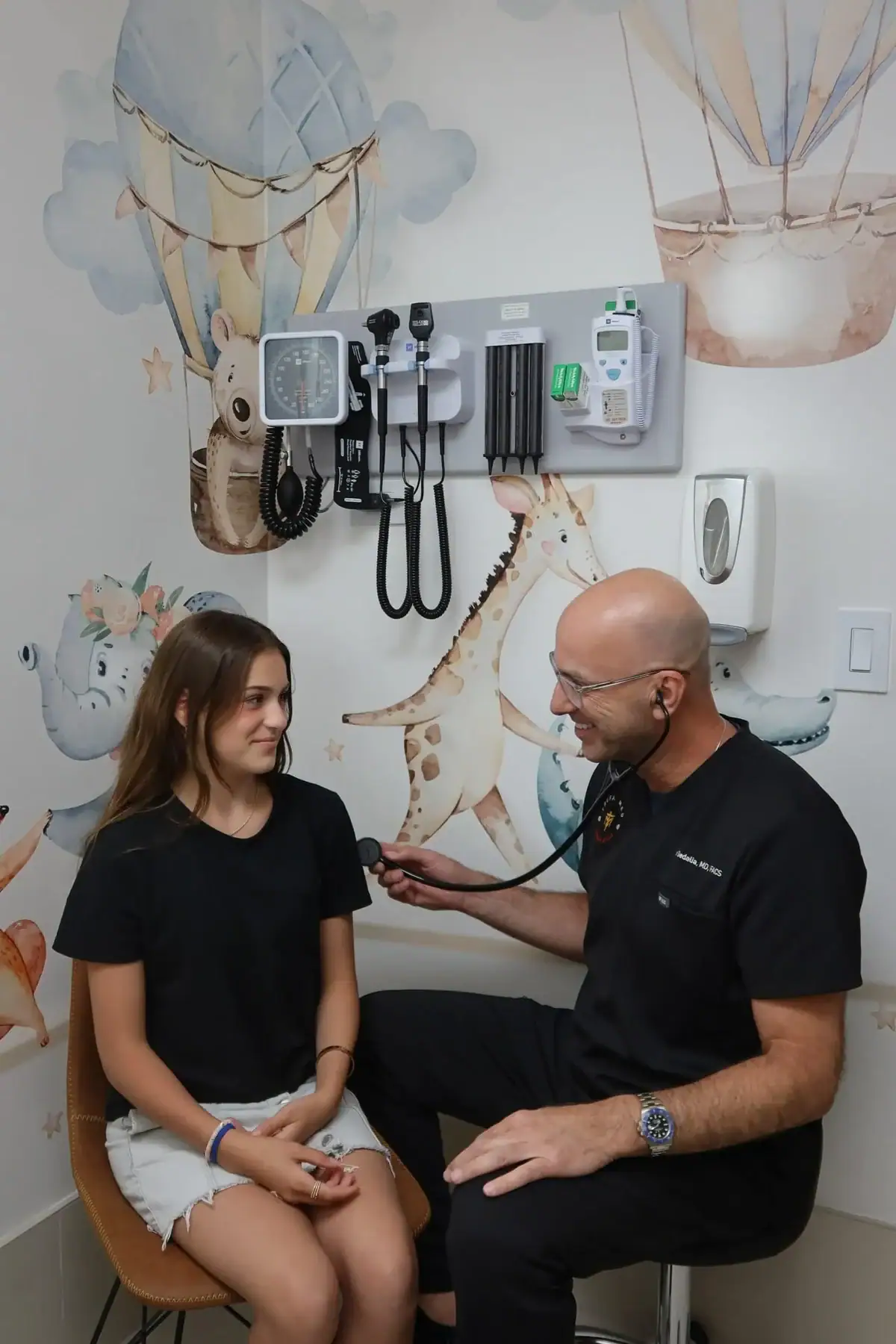
An ear infection happens when bacteria or a virus inflames the ear and fluid builds up, leading to pain, pressure, and sometimes muffled hearing. At TrufaMED, a board-certified physician examines your ear with an otoscope, identifies whether it is a middle ear infection or swimmer’s ear, and starts treatment the same visit. We see children and adults, seven days a week, with no appointment needed.
Signs it is time to come in
Ear pain rarely improves on its own once it sets in. Come in promptly if you notice any of these, and bring your child in early, since young kids often cannot describe what hurts.
Sharp or persistent ear pain
Pain that is deep and throbbing, or pain in the outer canal that worsens when you pull on the earlobe or press in front of the ear.
Drainage or fullness
Fluid draining from the ear, or a blocked, full feeling with reduced or muffled hearing on the affected side.
Fever with ear symptoms
A fever alongside ear pain, especially in children, points to an active infection that should be evaluated and treated.
A child tugging the ear
Pulling or tugging at the ear, unusual fussiness, trouble sleeping, or a loss of appetite are the most reliable clues in young children.
Itching then pain after swimming
Itching that turns into progressive canal pain after time in the water is the classic pattern of swimmer’s ear, common here in South Florida.
Dizziness or balance changes
Ear pressure paired with dizziness or unsteadiness deserves a physician exam to identify the cause and rule out complications.
Severe pain with a high fever, swelling or redness of the bone behind the ear, a stiff neck, or facial weakness can signal a spreading infection. For these, seek emergency care or call 911.
The main types of ear infection
Ear infections are grouped by where they sit in the ear. Each one looks different on exam and is treated differently, which is why an in-person otoscope check matters.
Middle ear infection
Acute otitis media is the most common type, especially in children. Fluid and inflammation build up behind the eardrum, often after a cold or sinus infection, causing deep throbbing pain, muffled hearing, and fever. It usually needs oral antibiotics when a bacterial cause is confirmed.
Swimmer’s ear
Otitis externa is an infection of the outer ear canal, especially prevalent in South Florida from swimming and humidity. It starts with itching, then pain that worsens when you tug the earlobe, along with canal swelling and discharge. It responds to prescription antibiotic and anti-inflammatory ear drops.
Fluid behind the eardrum
Serous otitis media is fluid in the middle ear without an active infection, often lingering after a resolved infection or alongside allergies and Eustachian tube dysfunction. It may not hurt, but it can dull hearing and sometimes needs monitoring or further care.
What your ear infection visit includes
Physician-led care built around an accurate diagnosis, so you leave with the right treatment.
Otoscope examination
A close look at the ear canal and eardrum with an otoscope. A healthy eardrum looks pearly gray and translucent; an infected one may appear red, bulging, or have visible fluid behind it.
Fever and symptom check
Full vital signs including temperature, plus a review of your symptom timeline and history, so treatment fits the severity and cause of the infection.
Hearing assessment
A basic hearing evaluation if you have muffled hearing or changes in how sound comes through on the affected side.
Prescription treatment
Targeted oral antibiotics for bacterial middle ear infections, prescription drops for outer ear infections, and pain relief, e-prescribed to any pharmacy in Miami-Dade.
Pediatric-friendly care
Our team is experienced with children of every age. We keep the room calm for young patients and explain each step clearly to parents.
Follow-up guidance
Clear instructions on medication, what to watch for, and when to return, plus a telehealth follow-up if symptoms last longer than expected.
Diagnosis and treatment at TrufaMED
Accurate treatment starts with a direct look. Our physicians examine the ear canal for inflammation, discharge, and debris, then check the eardrum’s color, position, and movement. That exam decides everything that follows, because a middle ear infection and an outer ear infection call for different medications.
Middle ear infections
When a bacterial middle ear infection is confirmed or strongly suspected, treatment usually means oral antibiotics, anti-inflammatory pain relief, and a clear follow-up plan. Not every case needs antibiotics right away. For mild infections in older children and healthy adults, watchful waiting with pain control is sometimes the better choice, and your physician will tell you which path fits your situation.
Swimmer’s ear
Outer ear infections are treated with prescription antibiotic ear drops, often combined with a steroid to calm swelling. Keeping the ear dry during treatment is essential, so we give specific guidance on swimming, showering, and drying. If the canal is badly swollen, we may place a small ear wick so the medication reaches the infected tissue.
When more is needed
If imaging is needed to rule out a complication, our on-site digital X-ray is available the same visit. For patients with recurrent infections, we discuss prevention and can arrange a referral to an ENT specialist. Ear symptoms sometimes travel with a sinus infection, and we treat both in one stop.
Ear infections in children
Children get ear infections far more often than adults because of how their ears are built. A young child’s Eustachian tube is shorter, more horizontal, and more flexible, which makes it less efficient at draining fluid and easier to block when adenoids swell or a cold sets in. By age three, roughly eight in ten children have had at least one ear infection.
We take a careful, age-aware approach. Our physicians weigh the child’s age, fever, and how long symptoms have lasted to choose the right treatment, prescribe weight-appropriate dosing, and show parents practical ways to ease pain at home. For children with repeated infections, we can arrange a referral to a pediatric ENT specialist. Families across Surfside and Miami Beach use our pediatric urgent care for exactly these moments.
Preventing ear infections in South Florida
Our warm, humid climate and year-round swimming make ear infections more common here. A few habits meaningfully lower the odds.
After the water
Use earplugs while swimming, tilt your head to drain trapped water, and dry the canal with a hairdryer on a low, cool setting. Never push cotton swabs into the ear.
For children
Keep vaccines like the pneumococcal shot up to date, practice good hand hygiene, and avoid secondhand smoke, all of which reduce a child’s ear infection risk.
For adults
Treat nasal congestion, allergies, and sinus symptoms promptly, and avoid flying or diving while congested, since pressure changes can set off a middle ear infection.
Clear pricing, no surprise bills
No insurance? A self-pay visit starts at $195 for a physician evaluation, with any add-ons priced up front, so you always know what to expect before you are seen. We also accept most major insurance plans.
Starting price for a physician evaluation; final cost depends on the care you need. We accept most major insurance plans, with transparent self-pay for everyone else.
Led by board-certified physicians
A board-certified physician leads every shift, so your ear infection is diagnosed and treated with hospital-grade training.
Dr. Naidoo leads the clinical team as Medical Director, board-certified in emergency medicine with deep experience in adult and pediatric urgent and emergency care. He brings calm, decisive judgment to every visit, from a child’s first ear infection to a stubborn case of swimmer’s ear.
Dr. Gedalia is TrufaMED’s Chief Medical Officer and a Fellow of the American College of Surgeons. He oversees the clinical protocols that govern care across every TrufaMED service, including how we diagnose and treat ear and upper respiratory infections.
Ear infections, answered
The questions patients across Surfside, Miami Beach, and Bal Harbour ask most before walking in.
Can urgent care treat an ear infection?
Yes. Ear infections are one of the most common reasons people walk in to TrufaMED Urgent Care. A board-certified physician examines the ear with an otoscope, identifies whether the infection is in the outer ear (swimmer’s ear), the middle ear, or elsewhere, and prescribes the right treatment on the spot, including oral antibiotics, prescription ear drops, and pain relief. No appointment or referral is needed, and most visits finish in under an hour.
How do I know if my child has an ear infection?
Common signs in children include pulling or tugging at the ear, unusual fussiness or crying, trouble sleeping, fever, fluid draining from the ear, difficulty hearing or responding to sounds, and a loss of appetite. Children often cannot describe ear pain, so these behavior changes are the clearest clue. If you notice them, bring your child in for a quick evaluation.
Do all ear infections need antibiotics?
No. Some ear infections, particularly mild middle-ear cases in children over two and in healthy adults, improve on their own with pain relief and time. Your physician assesses the severity, your age, your fever, and how long symptoms have lasted, then recommends either antibiotics or supportive care with a clear follow-up plan. Bacterial infections usually benefit from antibiotics; many viral ones do not.
How long does an ear infection take to clear up?
With the right treatment, most ear infections start improving within 48 to 72 hours, and full resolution usually takes 7 to 14 days. If symptoms are not getting better after two to three days of antibiotics, or if pain worsens, come back for a re-evaluation. We also offer a telehealth follow-up if symptoms linger beyond the expected timeline.
Do you treat swimmer’s ear?
Yes. Swimmer’s ear (otitis externa) is an outer-ear-canal infection that is common in South Florida because of frequent swimming, water sports, and humidity. We diagnose it on exam, treat it with prescription antibiotic and anti-inflammatory ear drops, and, for a severely swollen canal, may place a small ear wick so the medication reaches the infected tissue. We also walk you through how to keep the ear dry and prevent it from coming back.
When is an ear infection serious enough to go to the ER?
Most ear infections are safely treated at urgent care. Seek emergency care or call 911 for severe pain with a high fever, redness or swelling of the bone behind the ear, a stiff neck with confusion, sudden severe dizziness or balance loss, or facial weakness. These can signal a spreading infection and need immediate evaluation. When in doubt, walk in and a physician will tell you directly what level of care you need.
What is the difference between a middle ear infection and swimmer’s ear?
A middle ear infection (acute otitis media) develops behind the eardrum, often after a cold or sinus infection, and causes deep, throbbing pain, muffled hearing, and fever. Swimmer’s ear (otitis externa) is in the outer ear canal and causes itching and pain that gets worse when you pull on the earlobe or press in front of the ear. They are treated differently: the middle ear usually needs oral antibiotics, while swimmer’s ear responds to ear drops. The otoscope exam tells your physician which one you have.
Can adults get ear infections, or are they just a childhood problem?
Adults get ear infections too. Middle-ear infections in adults often follow an upper respiratory infection, sinus problems, or allergies, and swimmer’s ear is common at any age in our climate. Adults tend to have more noticeable ear pressure, muffled hearing, and drainage. The exam and treatment are the same physician-led approach we use for children.
How can I prevent ear infections in South Florida?
For swimmer’s ear, use earplugs while swimming, tilt your head to drain trapped water, dry the ear with a hairdryer on a low cool setting, and never push cotton swabs into the canal. For middle-ear infections in children, keep vaccines like the pneumococcal shot up to date, practice good hand hygiene, and avoid secondhand smoke. Adults can lower their risk by treating congestion and allergies promptly and avoiding flying or diving while congested.
Other conditions we treat same day
Ear symptoms often travel with a cold, a sinus infection, or a sore throat. We diagnose and treat the whole picture in one visit.
What patients say
Best clinic ever
Excellent. Attentive clean
The staff is very nice and courteous
Very nice receptionist
Best place I’ve been to by far great service
The staff are amazing, from front desk, registration, nurse , the Dr. A mean the facility very clean, conftuble, I'll give them 150% plus on everything and all. Thank you so very much
Care grounded in recognized authorities
Diagnosis and treatment follow guidance from national health authorities and accreditation standards.
Find the right care
Visit us in Surfside
Hours
Monday–Friday 9 AM – 9 PM
Saturday 11 AM – 11 PM
Sunday 12 PM – 8 PM
Walk in anytime during open hours, no appointment needed.
Contact
Phone (305) 537-6396
WhatsApp +1 (305) 842-9801
Email [email protected]
For a life-threatening emergency, call 911. TrufaMED is an urgent care clinic and does not provide emergency room care.
Ear pain? Get treated today
Walk in to 9445 Harding Ave for fast, physician-led ear infection care. Same-day diagnosis and treatment for children and adults, open seven days a week.
Frequently asked questions
Do you treat swimmer's ear?
Yes. Swimmer's ear (otitis externa) is an outer-ear-canal infection that is common in South Florida because of frequent swimming, water sports, and humidity. We diagnose it on exam, treat it with prescription antibiotic and anti-inflammatory ear drops, and, for a severely swollen canal, may place a small ear wick so the medication reaches the infected tissue. We also walk you through how to keep the ear dry and prevent it from coming back.
What is the difference between a middle ear infection and swimmer's ear?
A middle ear infection (acute otitis media) develops behind the eardrum, often after a cold or sinus infection, and causes deep, throbbing pain, muffled hearing, and fever. Swimmer's ear (otitis externa) is in the outer ear canal and causes itching and pain that gets worse when you pull on the earlobe or press in front of the ear. They are treated differently: the middle ear usually needs oral antibiotics, while swimmer's ear responds to ear drops. The otoscope exam tells your physician which one you have.
Notes from your physicians, every other week.
Seasonal health for South Florida, what we are seeing at the clinic, and the occasional thing worth knowing. No spam, and you can leave anytime.
TrufaMED, in your pocket.
Book urgent care, IV therapy, HBOT and telehealth, track your wellness, and reach your care team, all from the app.