
Services
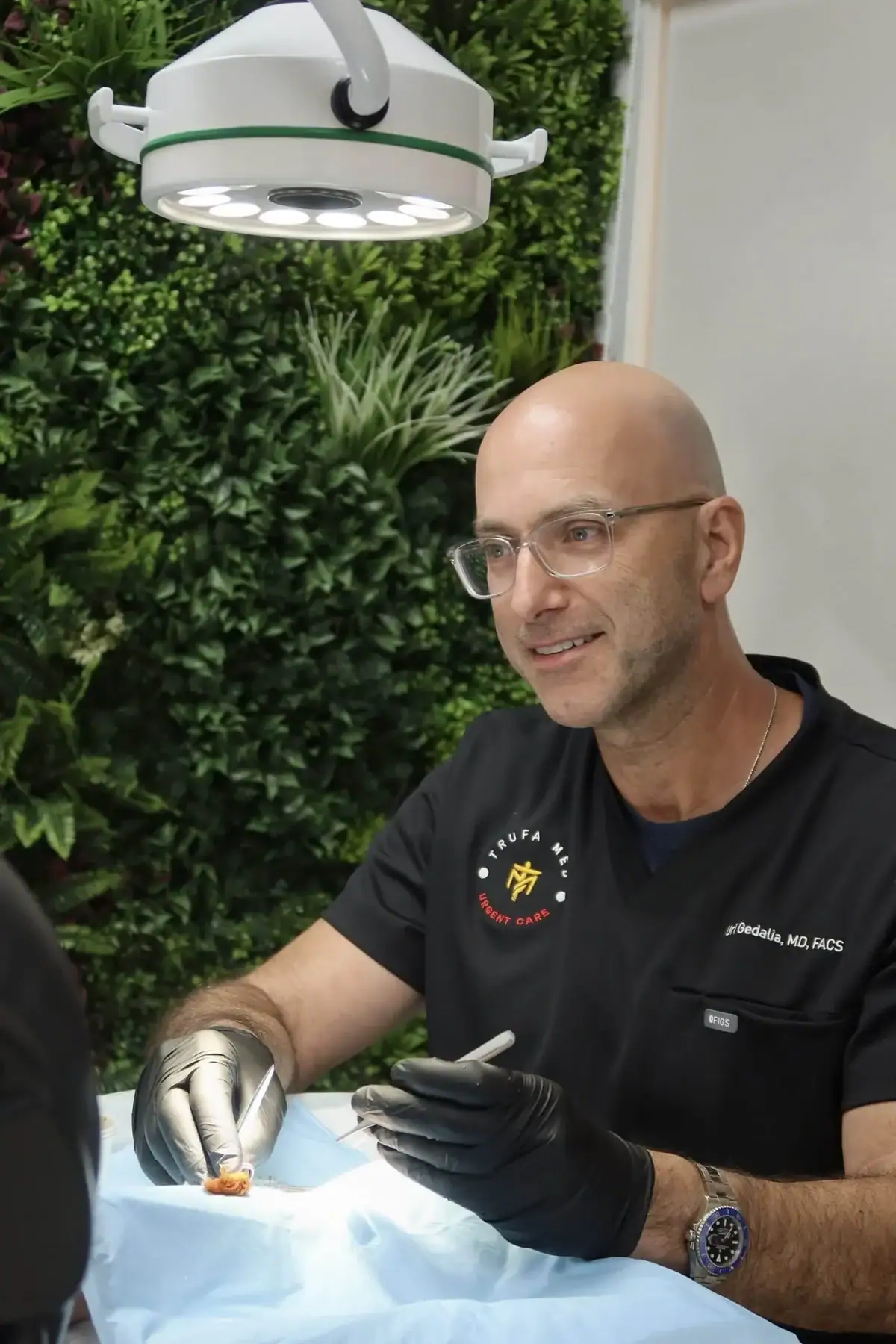
Laceration Repair
& Stitches
Walk in for a deep cut or gash and have it cleaned and closed the same day, by a board-certified surgeon. Sutures, skin glue, or staples, no ER wait, most repairs done in under an hour.
 Joint Commission Accredited
The only one in Florida
When you need stitches, and where to go
A cut needs professional closure when it is deeper than a quarter inch, will not stop bleeding after 15 minutes of steady pressure, has gaping or jagged edges, or sits on the face, hands, or over a joint. TrufaMED repairs lacerations on a walk-in basis at our Surfside clinic, closing wounds with sutures, skin glue, or staples. Most repairs finish in under an hour, for a fraction of the emergency room cost.
A clean closure starts with a surgeon
Stopping the bleeding on a cut to your forehead or your hand is only part of the work. How it is closed decides how it heals and what scar it leaves behind. At TrufaMED, that closure is led by a board-certified general surgeon.
Our Chief Medical Officer, Dr. Uri Gedalia, is a board-certified general surgeon and a Fellow of the American College of Surgeons. Wound closure is core to surgical training. That means a careful eye on layered repair, edge alignment, and tension, the details that give a finer scar, especially on the face and hands where the cosmetic result matters most. Alongside him, Dr. Shane Naidoo brings emergency-medicine experience treating wounds of every kind. You get hospital-grade skill in a calm, private setting, with on-site digital X-ray to check for glass or debris in the wound before it is closed.
Cosmetic-aware on the face
Facial and scalp cuts are closed with technique chosen to minimize scarring, the kind of attention a surgical background brings to a visible wound.
Careful on the hands
Hand and finger wounds sit near tendons and nerves. We assess for deeper damage first, then close in a way that protects function as well as appearance.
Imaging before closure
On-site digital X-ray checks for embedded glass, metal, or other foreign bodies that surface examination can miss, so the wound is clean before it is sealed.
How a laceration repair works
From the moment you walk in, the goal is a clean wound, a comfortable repair, and the best possible heal. Here is what to expect.
Assess and control bleeding
Your physician examines the wound, controls bleeding, and checks for damage to tendons, nerves, and blood vessels before anything else.
Clean and irrigate
The wound is thoroughly irrigated to flush out debris and bacteria. Damaged tissue is removed as needed. This step is what prevents infection.
Numb the area
Local anesthesia numbs the wound so the repair is comfortable. The only sting is the brief numbing injection, which passes in seconds.
Close the wound
Your physician closes with the method best suited to the wound: sutures, skin glue, or staples, chosen for location, depth, and cosmetic result.
Update tetanus if needed
We review your tetanus history and give a booster when it is due, especially for puncture wounds and cuts from dirty or rusty objects.
Dress and plan follow-up
The wound is dressed and you leave with clear care instructions and a scheduled suture-removal visit, so nothing is left to guesswork.
Sutures, skin glue, or staples
There is no single right way to close every cut. Your physician matches the method to the wound, balancing a strong repair with the cleanest possible result.
Sutures (stitches)
The strongest, most precise closure, used for deeper cuts, the hands, and areas under tension. We select the suture material and technique to fit the wound location.
Skin glue
Medical-grade adhesive closes clean, low-tension cuts with no needle and no removal visit. It is pain-free and especially good for children and small facial wounds.
Staples
Fast and reliable for the scalp and some larger straight wounds, where speed and strength matter more than a fine cosmetic line.
Adhesive strips
For shallow cuts with edges that sit together on their own, adhesive closure strips support healing without sutures or glue.
Tetanus assessment
We check your vaccination status and provide a booster when needed, a routine but important part of caring for any open wound.
Suture removal
We schedule your removal at the right time, typically 5 to 14 days depending on location, and check that the wound is healing cleanly.
The golden window for closing a cut
A wound is easiest to close cleanly soon after it happens. Most lacerations should be repaired within about 6 to 8 hours, and facial wounds can often be closed for up to 24 hours. The sooner a clean wound is closed, the lower the infection risk and the finer the scar.
If you are past the window, do not skip care. A physician can still clean the wound, manage it safely, and reduce the chance of complications. When in doubt, walk in and let us assess it. Wound care does not wait well, and a short visit now can prevent a much harder problem later. For deeper or contaminated wounds, see our wound care page, and if a cut comes with a possible broken bone, our sprains and fractures care can image and treat both in one visit.
When a cut belongs in the emergency room
Most lacerations that need stitches can be safely treated at urgent care, faster and at a fraction of the ER cost. A few cannot, and we will always tell you directly.
Bleeding that will not stop
Heavy, uncontrollable bleeding, or blood that spurts with the pulse, points to an arterial injury. Call 911 or go to the nearest emergency room.
Deep chest or abdomen wounds
A deep cut to the chest, abdomen, or back can involve organs or major vessels and needs emergency evaluation.
Tendon or nerve damage
If you cannot move a finger normally, or you have numbness past the cut, a tendon or nerve may be severed. That needs an emergency or specialist repair.
Amputation or exposed bone
A partially or fully amputated finger or limb, or a wound with bone visible through the skin, is an emergency. Call 911.
For a true emergency, call 911 or go to the nearest emergency room. TrufaMED treats non-life-threatening lacerations.
Stitches here, not at the ER
The emergency room is built for life-threatening injuries. For most cuts that need closing, walking into TrufaMED is faster, far less expensive, and just as skilled.
| Getting a cut stitched | Walk-inTrufaMED | HospitalEmergency room |
|---|---|---|
| Typical wait for a non-critical cut | Seen in minutes | 2 to 4 hours |
| Most repairs completed in | Under an hour | Often half a day |
| Closed by a board-certified surgeon | Yes | Varies |
| On-site X-ray for foreign bodies | Yes | Yes |
| Typical cost for a simple repair | A fraction of the ER | Can exceed $2,000 |
| Private, calm setting | Yes | No |
Cost figures are typical ranges and vary by wound and by plan. We share your pricing up front, before any work begins.
Clear pricing, no surprise bills
We accept most major insurance plans and bill your visit to your carrier. No insurance? A physician visit starts at $195, and the laceration repair itself is quoted up front, based on the size and complexity of the wound, before any work begins.
The repair is priced at your visit based on the wound. Starting prices shown; final cost depends on the care you need. See the full sheet on our self-pay pricing page, or review accepted plans on our insurance page.
Caring for the wound at home
A clean repair is half the work. The other half is how you care for the wound over the next week or two. We send you home with clear instructions and a removal appointment.
Keep it clean and dry
Follow the instructions for keeping the wound clean and covered. Most stitches should stay dry for the first 24 to 48 hours.
Watch for infection
Spreading redness, warmth, swelling, pus, or a fever can signal infection. If you see these signs, come back in and we will take a look.
Protect the scar
Once healed, keeping the area out of the sun and following our scar-care advice helps the line fade. Facial wounds especially benefit from this.
Come back for removal
Return for suture removal at the scheduled time. We confirm the wound has healed cleanly and answer any questions before you go.
A surgeon and an emergency physician
Wound closure is where clinical training shows. TrufaMED is led by Dr. Uri Gedalia, Chief Medical Officer, and Dr. Shane D. Naidoo, Medical Director, with five physicians on staff whose experience spans general surgery, wound care, and emergency medicine.
Dr. Gedalia earned his medical degree from Louisiana State University and completed his surgical residency at St. Vincent’s Hospital in New York. As a board-certified general surgeon, wound closure is core to his training. He also serves as Regional Chief Medical Officer for a surgical and wound-care program, so a complex or cosmetically sensitive repair is in expert hands.
Dr. Naidoo brings extensive adult and pediatric emergency, trauma, and critical-care experience from high-volume emergency departments across the East Coast. He has treated wounds of every kind under pressure, and brings calm, decisive judgment to assessing and closing a laceration safely.
Lacerations and stitches, answered
The questions patients across Surfside, Miami Beach, and Bal Harbour ask before they walk in with a cut.
How do I know if I need stitches?
You likely need stitches if the cut is deeper than a quarter inch, the edges do not stay together on their own, bleeding does not stop after 15 minutes of steady direct pressure, or the wound is on the face, hands, or over a joint. Gaping wounds, jagged edges, and cuts from a dirty or rusty object also need professional closure to lower the risk of infection and scarring. If you are unsure, walk in and a physician will assess it for you.
How long after a cut can I still get stitches?
There is a golden window for closing a wound. Most lacerations should be repaired within about 6 to 8 hours, and facial wounds can often be closed for up to 24 hours because of the rich blood supply in the face. The sooner a clean wound is closed, the lower the infection risk and the better the cosmetic result. If you are past the window, do not skip care: a physician can still clean the wound, manage it safely, and reduce complications.
Does Dr. Gedalia being a surgeon actually matter for a cut?
Yes, especially on the face and hands. Dr. Uri Gedalia is a board-certified general surgeon and a Fellow of the American College of Surgeons, so wound closure is core to his training. A surgical eye on layered repair, tension, and edge alignment is what gives a clean, cosmetically aware result and a finer scar. For a visible cut, that experience is the difference between a wound that simply closes and one that closes well.
Does getting stitches hurt?
We numb the area with local anesthesia before any suturing, so you should feel little to nothing during the repair itself. The numbing injection causes a brief sting that passes in seconds. For children and for many smaller wounds, skin glue or adhesive strips often avoid needles altogether, which makes the visit far easier on younger patients.
Sutures, skin glue, or staples: which will I get?
It depends on the wound. Sutures (stitches) give the strongest, most precise closure and are used for deeper cuts, the hands, and high-tension areas. Skin glue is a pain-free, no-needle option for clean, low-tension cuts and is popular for children and small facial wounds. Staples are fast and well suited to the scalp. Your physician selects the method that best fits the wound’s location, depth, and the cosmetic result you want.
Do I need a tetanus shot for my cut?
Possibly. We review your tetanus history during the visit. A booster is recommended if it has been more than 5 years for a dirty, deep, or puncture wound, or more than 10 years for a clean minor cut. Wounds from rusty or contaminated objects raise the priority. If you need a booster, we can give it during the same visit.
When do the stitches need to come out, and who removes them?
Removal timing depends on the location: face stitches usually come out in 5 to 7 days, body stitches in 7 to 10 days, and stitches on the hands or over a joint in 10 to 14 days. Skin glue sloughs off on its own. We schedule your removal visit before you leave and send you home with clear wound care instructions to keep the area clean and minimize scarring.
Can you treat a laceration on my child?
Yes. We provide pediatric laceration care for children, and for suitable wounds we use skin glue, which is painless and works well for kids. Our team is experienced at keeping young patients calm, and we choose the gentlest closure method that still gives a strong, clean repair. For infants under six months with a significant cut, we may direct you to the pediatric emergency room.
How much does laceration repair cost without insurance?
We accept most major insurance plans, and your visit is billed to your carrier. For self-pay patients, a physician visit starts at $195, with the laceration repair itself quoted up front based on the wound’s size and complexity before any work begins, so there are no surprise bills. This is a fraction of a typical emergency room charge for the same care. Ask our front desk and we will give you a clear quote.
When should I go to the ER instead of urgent care for a cut?
Go to the emergency room or call 911 for heavy bleeding that will not stop, a deep wound to the chest or abdomen, a possible severed tendon or nerve, numbness or loss of movement past the cut, an amputated or partially amputated finger or limb, or a wound with a broken bone visible through the skin. For almost everything else that needs stitches, urgent care is faster, far less expensive, and the right level of care.
Other things we treat same-day
A laceration often comes with a fall, a burn, or a sprain. We handle the full range of non-emergency injuries in one visit.
What patients say
Best clinic ever
Excellent. Attentive clean
The staff is very nice and courteous
Very nice receptionist
Best place I’ve been to by far great service
The staff are amazing, from front desk, registration, nurse , the Dr. A mean the facility very clean, conftuble, I'll give them 150% plus on everything and all. Thank you so very much
Care grounded in recognized authorities
Diagnosis and treatment follow guidance from national health authorities and accreditation standards.
Find the right care
Walk in to repair a cut
Hours
Monday–Friday 9 AM – 9 PM
Saturday 11 AM – 11 PM
Sunday 12 PM – 8 PM
Walk in anytime during open hours, no appointment needed.
Contact
Phone (305) 537-6396
WhatsApp +1 (305) 842-9801
Email [email protected]
For a life-threatening emergency, call 911. TrufaMED is an urgent care clinic and does not provide emergency room care.
Cut that needs stitches?
Walk in for expert laceration repair at 9445 Harding Ave. A board-certified surgeon, on-site imaging, and same-day closure, open seven days a week. No ER wait needed.
Not sure whether a cut needs closure? Read our guide to first aid for burns, cuts, and wounds.
Notes from your physicians, every other week.
Seasonal health for South Florida, what we are seeing at the clinic, and the occasional thing worth knowing. No spam, and you can leave anytime.
TrufaMED, in your pocket.
Book urgent care, IV therapy, HBOT and telehealth, track your wellness, and reach your care team, all from the app.