
Services
Skin Rash
Treatment
Same-day, physician-led care for rashes, hives, eczema, contact dermatitis, fungal infections, and skin infections. We find the cause and prescribe treatment on the spot. No appointment needed.
 Joint Commission Accredited
The only one in Florida
Where do I go for a skin rash in Miami?
Skin rashes can appear suddenly and range from mildly irritating to intensely uncomfortable, and waiting weeks for a dermatology appointment is rarely an option when a rash is spreading or painful. TrufaMED in Surfside is a physician-led walk-in clinic that evaluates and treats most rashes the same day. We examine the skin, identify the likely cause, and prescribe topical or oral medication before you leave, with on-site lab testing if it is needed.
When a rash is worth a same-day visit
A rash that is new, spreading, or uncomfortable rarely needs to wait. Walk in if any of the following describes what you are seeing.
It appeared suddenly and is spreading
A rash that came on quickly and is widening across the body is worth evaluating the same day, before it covers more skin or worsens overnight.
It is painful or blistering
Pain, blisters, or open sores point to a reaction or infection that benefits from prompt treatment.
It comes with fever or joint pain
A rash paired with fever, body aches, or joint pain can signal an infection or a systemic reaction that a physician should assess right away.
It shows signs of infection
Warmth, swelling, pus, or red streaking spreading outward from the rash are signs of a skin infection that needs antibiotics, sometimes urgently.
It is not improving on its own
A rash that has not started to settle after several days of over-the-counter creams usually needs a prescription-strength treatment and a clear diagnosis.
It keeps coming back
A recurring rash points to an ongoing trigger or an underlying condition. We treat the flare and help you identify what is setting it off.
For face or throat swelling, trouble breathing, or widespread blistering, this is an emergency. Call 911 or go to the nearest emergency room.
When a rash is an emergency
Some rashes are signs of a life-threatening reaction. If you see any of these, do not wait for a clinic visit.
- Swelling of the lips, tongue, or throat, or any trouble breathing or swallowing. This can be anaphylaxis. Call 911.
- A rash spreading rapidly alongside a high fever, or skin that is blistering or peeling away in sheets.
- Purple or red spots or patches that do not fade when you press a clear glass against the skin.
- Faintness, a racing heart, or a sense of impending doom along with a new rash or hives.
- A rash covering a large portion of the body that came on within minutes of a food, medication, or sting.
- Severe pain, rapidly darkening skin, or a wound that looks far worse than it feels.
For these signs, call 911 or go to the nearest emergency room. TrufaMED treats non-life-threatening skin conditions; for everything short of the above, we provide same-day walk-in care.
From an itchy patch to a spreading infection
Our physicians treat the full range of common skin problems, with prescriptions filled on-site so relief starts the same day.
Hives and allergic reactions
Rapid treatment for hives (urticaria), allergic skin reactions, and contact dermatitis with antihistamines and corticosteroids, plus help identifying the trigger so it does not happen again.
Eczema and dermatitis flare-ups
Management of acute eczema, atopic dermatitis, and seborrheic dermatitis with prescription-strength topical treatment, a moisturizing plan, and practical steps to prevent the next flare.
Fungal and yeast infections
Diagnosis and treatment of ringworm, athlete’s foot, jock itch, and yeast infections, common in Miami’s humidity, with antifungal cream or tablets when the infection is more stubborn.
Skin infections
Evaluation and treatment of cellulitis, impetigo, folliculitis, and infected wounds with antibiotics and wound care, to stop the infection from spreading and prevent complications.
Insect bite reactions
Treatment for strong reactions to mosquito bites, fire-ant stings, and other bites, with antihistamines, corticosteroids, and steps to keep the skin from getting infected. See insect bite care.
Poison ivy and plant reactions
Relief for contact dermatitis from poison ivy, poison oak, and other plant exposures with corticosteroid therapy, anti-itch treatment, and care for any blistering.
Heat rash and sun reactions
Care for heat rash, prickly heat, and sun-related skin irritation, all of it common in the South Florida climate, with cooling measures and topical treatment to settle the skin.
Shingles
Same-day evaluation of a painful, blistering, one-sided rash that may be shingles. Antiviral medication works best when it is started early, so prompt assessment matters.
How a physician evaluates your rash
A rash is a clue and not a diagnosis on its own. The goal of the visit is to find the cause and match it to the right treatment.
History and exposures
Your physician reviews when the rash started, where it began and how it has spread, and what you were exposed to, including new products, foods, plants, insects, and any recent medications.
Hands-on examination
They examine the pattern, color, texture, and borders of the rash, along with where on the body it appears. Most rashes can be diagnosed by examination alone.
On-site testing when needed
When the cause is unclear, our CLIA-certified lab can run testing on-site, and a simple skin scraping can confirm a fungal or bacterial cause the same day.
Targeted treatment
You leave with a clear diagnosis and a prescription matched to the cause, whether that is a topical steroid, an antihistamine, an antifungal, or an antibiotic.
What we can prescribe the same day
When it is clinically appropriate, our physicians prescribe and e-send treatment to any pharmacy in Miami-Dade County before you leave.
Most rashes respond well to targeted medication once the cause is clear. For inflammatory and allergic rashes, a topical corticosteroid calms the skin, and an oral antihistamine controls itching and hives. For a more severe or widespread reaction, a short course of oral steroids brings it under control quickly.
Fungal rashes such as ringworm, athlete’s foot, and yeast infections are treated with antifungal cream, and with antifungal tablets when the infection is deeper or stubborn. Bacterial skin infections like cellulitis and impetigo are treated with antibiotics, and we watch closely for any sign that the infection is spreading. For a painful, blistering, one-sided rash that may be shingles, an antiviral started early shortens the course and reduces complications.
For a rash that does not respond to initial treatment or that returns again and again, we refer you to a board-certified dermatologist with full documentation of your evaluation and treatment so far. The aim is immediate relief now, and the right long-term care after.
Common rashes in South Florida
Miami’s warm, humid climate creates a distinct set of skin challenges. Heat rash, fungal infections, and sun-related irritation are all especially common here, and exposure to tropical plants, insects, and salt water can trigger reactions that residents from other regions may never have seen before.
Contact dermatitis from plants, chemicals, and jewelry is one of the most frequent reasons patients come to TrufaMED for a skin concern. Our physicians identify the irritant or allergen responsible and prescribe targeted treatment to resolve the reaction and reduce the chance it returns. Because we see these conditions week after week, the pattern recognition is fast, and so is the relief.
Same-day care for related conditions
A rash often travels with another concern. We treat all of these in the same visit, under one physician-led roof.
Clear pricing, no surprise bills
No insurance? A self-pay physician evaluation starts at $195, and the price is shared up front. Most rash visits are diagnosed by examination, so the visit fee often covers the whole encounter.
Starting price; final cost depends on the services you need. We also accept most major insurance plans. Call (305) 537-6396 to verify your plan.
Led by board-certified physicians
Our clinical leadership brings hospital-grade training in emergency medicine and surgery to a calm, boutique walk-in setting.
Dr. Naidoo leads the clinical team as Medical Director. Board-certified in emergency medicine, with deep experience in adult and pediatric emergency care, he brings the judgment to tell a routine rash from one that needs urgent attention, and to act quickly when it does.
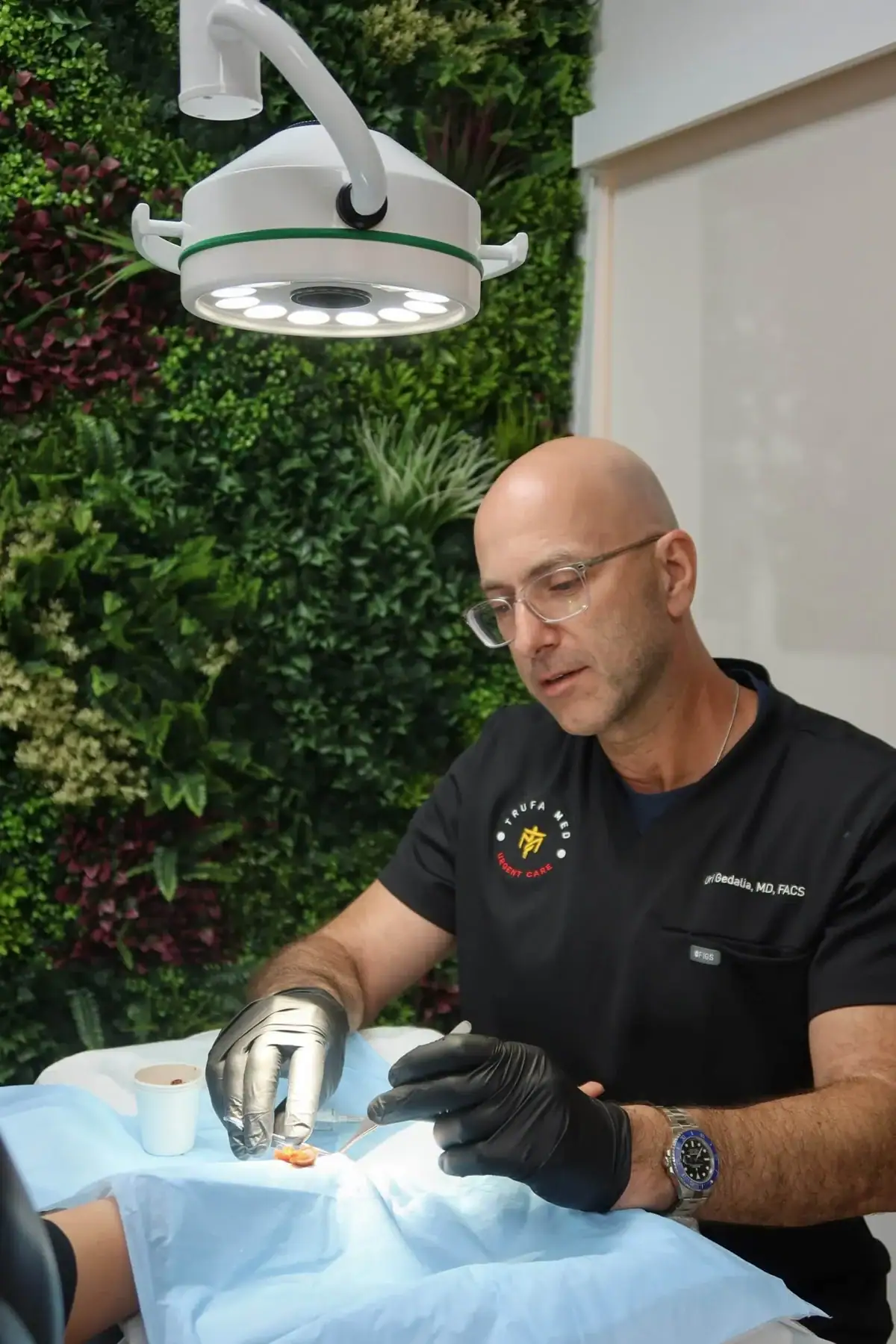
Dr. Gedalia is TrufaMED’s Chief Medical Officer and a Fellow of the American College of Surgeons. His surgical background is valuable for skin infections, abscesses, and wounds that need procedural care, and he oversees clinical protocols across every TrufaMED service.
Skin rash care, answered
The questions patients across Surfside, Miami Beach, and Bal Harbour ask most before walking in.
Can urgent care treat a skin rash?
Yes. A board-certified physician leads every shift, and our clinical team diagnoses and treats a wide range of rashes the same day: allergic reactions, hives, eczema and contact dermatitis flare-ups, fungal infections, and skin infections like cellulitis. We examine the rash, determine the likely cause, and prescribe topical or oral medication on-site, with no appointment needed.
How do I know if my rash is an emergency?
Call 911 or go to the nearest emergency room if a rash comes with trouble breathing, swelling of the lips, tongue, or throat, or widespread blistering or peeling skin. Also seek emergency care for a rash with a high fever that is spreading quickly, or purple or red spots that do not fade when you press a glass against them. For everything else, walk in and we provide same-day evaluation and treatment.
Should I visit urgent care or wait for a dermatologist?
Visit us first for any rash that is spreading, painful, blistering, accompanied by fever, or showing signs of infection such as warmth, pus, or red streaking. We treat it the same day and, for a chronic or complex skin condition, refer you to a board-certified dermatologist with full documentation of your visit. Waiting weeks for a dermatology appointment is rarely the right call when a rash is worsening.
Can you prescribe steroid creams and other medication for a rash?
Yes. When it is clinically appropriate, our physicians prescribe topical corticosteroids, oral steroids, antihistamines, antifungal creams or tablets, and antibiotics for infected skin. We send the prescription to any pharmacy in Miami-Dade County before you leave, so treatment can start the same day.
What causes most rashes in South Florida?
Miami’s warm, humid climate drives a distinct set of skin problems. Heat rash, fungal infections like ringworm and athlete’s foot, and sun-related irritation are all common here. Contact dermatitis from tropical plants, chemicals, and jewelry is one of the most frequent reasons patients come in, and reactions to mosquito and fire-ant bites are routine. Our physicians see these conditions every week.
How does a physician figure out what kind of rash I have?
Your physician reviews when the rash started, where it appeared and how it spread, and what you were exposed to, including new products, foods, plants, insects, and medications. They examine the pattern, color, texture, and borders of the rash. Most rashes are diagnosed by examination alone; when needed, we can run on-site lab testing or a skin scraping to confirm a fungal or bacterial cause.
What should I bring or note for my visit?
Note when the rash began, anything new you were exposed to, such as a detergent, lotion, plant, or food, and any creams, antihistamines, or home remedies you have already tried. A clear photo of the rash at its earliest stage is genuinely useful, since rashes often change appearance over a day or two. Bring a list of your current medications and any known allergies.
Do I need a referral or an appointment to be seen for a rash?
No. TrufaMED is a walk-in clinic, no referral and no appointment required. Walk in during open hours: Monday to Friday 9 AM to 9 PM, Saturday 11 AM to 11 PM, and Sunday 12 PM to 8 PM. You can also check in online ahead of arrival to shorten your time at the front desk.
Can you treat my child’s rash?
Yes. We provide pediatric urgent care for children of all ages, including common childhood rashes: eczema flare-ups, hives, hand-foot-and-mouth, impetigo, fifth disease, heat rash, and reactions to insect bites. Our clinic has pediatric-sized equipment and physicians experienced with children. For a rash with a high fever in an infant under six months, contact their pediatrician or the pediatric ER.
How much does a skin rash visit cost without insurance?
A self-pay physician evaluation starts at $195, and the price is shared up front with no surprise billing. Most rash visits are diagnosed by examination, so the visit fee often covers the whole encounter; any prescription is filled at your pharmacy. We also accept most major insurance plans. Call (305) 537-6396 to verify your plan before you come in.
What patients say
Best clinic ever
Excellent. Attentive clean
The staff is very nice and courteous
Very nice receptionist
Best place I’ve been to by far great service
The staff are amazing, from front desk, registration, nurse , the Dr. A mean the facility very clean, conftuble, I'll give them 150% plus on everything and all. Thank you so very much
Care grounded in recognized authorities
Diagnosis and treatment follow guidance from national health authorities and accreditation standards.
Find the right care
Visit us in Surfside
Hours
Monday–Friday 9 AM – 9 PM
Saturday 11 AM – 11 PM
Sunday 12 PM – 8 PM
Walk in anytime during open hours, no appointment needed.
Contact
Phone (305) 537-6396
WhatsApp +1 (305) 842-9801
Email [email protected]
For a life-threatening emergency, call 911. TrufaMED is an urgent care center and is not an emergency room.
A rash that will not go away?
Walk in today at 9445 Harding Ave for a same-day skin evaluation and prescription treatment. Physician-led, on-site testing, open seven days a week.
Notes from your physicians, every other week.
Seasonal health for South Florida, what we are seeing at the clinic, and the occasional thing worth knowing. No spam, and you can leave anytime.
TrufaMED, in your pocket.
Book urgent care, IV therapy, HBOT and telehealth, track your wellness, and reach your care team, all from the app.